Overview
Modern office design ideas transform workplaces into inspiring, productive environments. By blending aesthetics, flexibility, technology, and wellbeing, employers create nurturing spaces where energy rises, creativity flows, and people thrive. This comprehensive guide covers design strategies, furniture, ESG, hybrid models, wellness, and portable office solutions.
Why Modern Office Design Ideas Matter
An office is more than desks and walls. It reflects your brand, supports employee wellbeing, and influences productivity. Today’s employees expect flexible, attractive, and tech-enabled workspaces that rival the comforts of their own homes.
A study from the University of Exeter found that employees in enriched, well-designed environments were 17% more productive. This highlights how design choices directly raise energy, engagement, and overall performance.
Choosing the Right Contractors for Office Refurbishment
The choice of contractors will make or break your refurbishment project. Look for companies that specialise in office fit-outs and have experience in delivering modern, future-ready workplaces. You’ll want a team that:
- Understands the dynamics of hybrid working
- Has experience with technology-rich environments
- Incorporates sustainable and energy-efficient materials
- Can manage the full lifecycle from planning and design to installation
It’s also wise to choose a firm with a strong local presence and a trusted reputation. For example, Amos Beech has been delivering high-quality office refurbishment and fit-out services in Glasgow and Edinburgh since 1990.
Step One: Strip Out and Reset
You cannot create a thriving office environment on a tired foundation. Old carpets, broken desks, and clutter carry stagnant energy that drags morale down. By stripping out your current office, you symbolically reset, making room for fresh ideas and modern energy.
Step Two: Ask Employees for Input
True modern office design ideas are co-created. Employees spend hours in the space, so their input is vital. Surveys, suggestion boxes, or conversations help staff feel valued and ensure the office supports real needs. Shared ownership raises morale, energy, and trust.
Step Three: Invest in Quality Furniture
Cheap furniture is a false economy. Poor ergonomics can lead to fatigue and discomfort, ultimately draining energy. Investing in supportive chairs and desks improves wellbeing and productivity.
Reception furniture also matters. For example, Amos Beech provides stylish reception pieces that reflect professionalism while keeping staff comfortable. High-quality furniture demonstrates to employees that they are valued, which in turn boosts their morale and motivation.
Step Four: Design Relaxing Break Areas
Balance fuels productivity. Break areas stocked with comfortable seating, calming colours, and even meditation spaces remind employees to recharge.
A positive environment signals care, boosting wellbeing and allowing staff to return with higher energy. That renewed energy naturally spreads to others, enhancing collaboration and focus.
One thing you might not have considered in the workplace is catering. Do your employees have a dedicated area to eat their lunch? If not, they could end up eating at their work desk, which is known to be detrimental to productivity.
At the very least, you’ll want a comfortable staff room your employees can relax in. However, if you want to keep them happy, it’s worth considering investing in catering equipment. That way, you’ll be able to serve up healthy, nutritious meals on-site. You can pick up affordable yet professional catering equipment from companies such as JLA.
Step Five: Embrace the Latest Technology
Modern office design ideas are incomplete without updated technology. Outdated systems frustrate staff and waste time. High-performance monitors, reliable connectivity, and collaboration tools make hybrid working seamless.
Technology is constantly evolving; it can sometimes be challenging to keep up with the latest models. If this is the case for you, it would be a good idea to check out a few helpful guides online, as they can help you determine whether something is actually worth your money.
In this digital age, there is rarely a need for a lot of physical space. Consider switching to cloud-based collaboration tools that can reduce the need for physical storage. Keeping all files and documents on the cloud can limit hard copies that lead to clutter.
Investing in technology is more than practical; it demonstrates to employees that their time and contributions matter, boosting morale and encouraging innovation.
Investing in a high-performance work monitor can enhance productivity, offering speed, reliability, and the ability to handle complex tasks efficiently. Leveraging the right technology can help maintain the collaborative spirit of the office while accommodating those who choose to work remotely some of the time. It sends a message to your employees that your office is not stuck in the past but is forward-thinking and ready to adapt to the evolving business landscape.
Replacing lots of tech at once might be too expensive. Still, gradually you can upgrade everything from your PCs and photocopiers to your fridges and heating system – making considerable energy savings as a result. For instance, instead of having separate devices for scanning and printing, a significant improvement for businesses could be the adoption of business multifunction copiers, which combine multiple functions into one, not only saving energy but also reducing the overall equipment footprint in the office.
Solutions for Flexibility
Another essential factor that should be considered to make the workplace more comfortable is flexibility. As studies show, workers mostly prefer flexible workspaces, where boundaries don’t restrict them and they have a space to move. Thus, to ensure a productive workspace with all the above-mentioned amenities, many business owners often give preference to office space rentals. Henceforth, if you are looking for office space in a location with a healthy and happy working environment, you should consider Seattle office space for rent, as the city is among the top 10 places with the best life-work balance. Besides, Seattle is among the top coworking cities in the USA.
Portable offices offer a combination of mobility, adaptability, and cost savings. Cabins, trailers, or sea-can offices allow professionals to create flexible workspaces anywhere.
They reduce rent and commuting costs while lowering energy consumption. Portable workspaces can make it feel as if you are Virtually There with clients. Mobility empowers independence, raises energy, and supports focus.
Portable offices can be beneficial for self-employed freelancers, as they offer a high level of flexibility and customisability. These two features are often limited in a fixed office workplace. If you’re considering using one over a fixed office as someone who works for themselves, keep reading.
Consider Suspended Ceilings
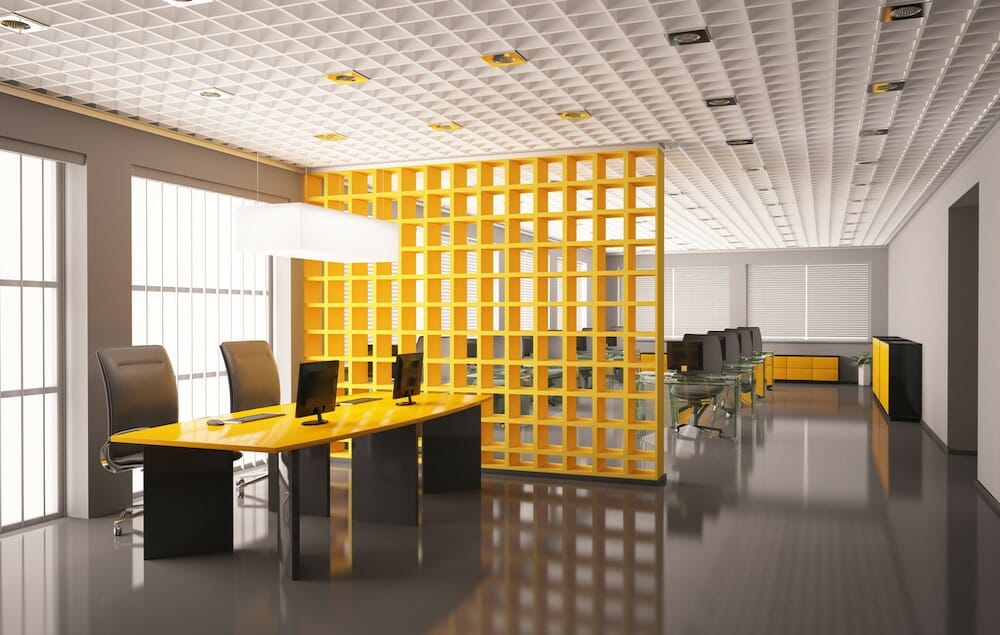
Suspended ceilings can provide a clean, modern look to your office whilst improving acoustics and hiding unsightly ductwork or wiring. Additionally, they can be used to incorporate lighting fixtures or ventilation systems. It’s a great way to improve the look and function of your office!
Organisation: The Backbone of Productivity
Disorganisation drains focus. Employees waste time searching for supplies or files, lowering morale. Organisation creates clarity, calm, and efficiency.
Divide work into zones for documents, supplies, and collaboration. Encourage consistent digital filing. An organised office radiates order, creating an environment where staff feel secure and energised.
ESG Principles in Office Design
What Is ESG? The acronym ESG stands for Environmental, Social, and Governance factors. These are also the most critical criteria in its reporting. The Environmental factor deals with how businesses use resources, and it considers what they do to manage and prevent their negative impact on the environment. It’s now more important than ever to take action to preserve and protect our planet. By improving ESG practices, business owners can also enhance employee satisfaction and, consequently, productivity. In turn, the business will achieve good results and expand its operations.
Employees who see their workplace reflecting ethical values feel energised and aligned with the business purpose. ESG-aligned design nurtures both individuals and the collective.
Redesign for Aesthetics and Comfort
Aesthetic choices directly affect mood. Bright, modern spaces uplift staff, while dark and outdated offices lower morale and energy.
Natural light, colour, and ergonomic furniture create inviting atmospheres. Comfort shows respect, and employees who feel respected radiate positivity, boosting team energy and cohesion.
Biophilic Design: Bring Nature Inside
Humans thrive in nature. Biophilic design, which incorporates plants, wood textures, and water features, helps reduce stress and boost mood.
Natural elements improve creativity, focus, and resilience. Offices that bring the outdoors inside become restorative spaces where energy flows more freely and employees feel more connected.
Prioritise Mental Health and Safety
Mental wellbeing drives performance. Providing HR support, quiet spaces, or flexible policies fosters a sense of psychological safety. Employees who feel supported bring higher creativity and energy into their roles.
A culture of care reduces turnover, boosts morale, and fosters trust, all of which enhance collective productivity and overall effectiveness.
Education and Growth Opportunities
A modern workplace encourages growth. Offering training programmes, online workshops, or in-house classes keeps energy high and skills sharp.
Employees who feel their development is supported are more engaged and motivated, bringing fresh ideas and enthusiasm into the office.
Open Communication Builds Trust
Trust thrives in open dialogue. Regular meetings and feedback sessions foster transparency. Employees feel heard, which creates a culture of respect and energy.
Open communication reduces conflict, builds confidence, and channels energy into meaningful collaboration.
Team Dynamics and Recognition
Recognition fuels motivation. Celebrating achievements publicly helps build confidence and boost morale.
Team-building activities and acknowledgement of individual contributions strengthen collaboration. A culture of recognition spreads positivity, boosting team energy and performance.
Health and Wellness at Work
The work environment can have a surprising effect on your employees’ wellbeing. Poor lighting can give them physical health problems, such as headaches, causing them to take more sick days. Similarly, poor air quality can also be a significant concern for their health.
Office appliances can use a lot of energy. Highlighting this point in an infographic, business utility specialist Utility Bidder listed some of the most power-hungry techs in typical workplaces. For example, did you know that an average office air conditioning unit can use up to 4,000 watts, while servers can use 1,000 watts? Meanwhile, desktop computers can consume around 100 watts, while desktop monitors use approximately 25 watts.
These are just some of the things which can impact your workers. A poor working environment is known to decrease morale, lower productivity, and motivation. So, if your employees have been performing poorly, it could have to do with their physical working environment.
Healthy staff bring higher energy and resilience. Ergonomic equipment, wellness programmes, and clean air systems protect wellbeing.
For example, partnering with HTS New England ensures optimal air quality. Wellness is not a perk; it is essential for maintaining energy, productivity, and retention.
Flexible Working Models
Hybrid and flexible models respect employees’ lives. Hot desking, collaborative hubs, and adaptable schedules support a work-life balance.
While some businesses have chosen to operate fully remotely, others are opting to maintain a traditional office space. There are many benefits to having a physical office for your business; it fosters a sense of community among your staff on a level that remote work cannot offer.
Flexibility nurtures loyalty and raises energy. When staff feel trusted, they bring creativity and commitment into the office willingly.
Expansion and Flexibility in Modern Office Refurbishment
Business expansion often goes hand in hand with modern office refurbishment, creating workspaces that strike a balance between growth and employee wellbeing. The right timing is critical; expand too soon and resources can be stretched thin, but wait too long and opportunities may pass. Alongside market research and strategic planning, it’s essential to prepare employees for change. Expansion can bring added pressure, uncertainty, and shifts in culture, so open communication and a strong commitment to company values help maintain stability during growth.
Flexibility is central to both expansion and modern office refurbishment. Plans rarely run exactly as expected, so businesses must stay adaptable while protecting long-term sustainability. Creating flexible schedules and adaptable environments supports staff and helps maintain productivity. Many organisations now use solutions such as flexible workspaces in London from BE Offices to design offices that scale with their business needs. By combining careful planning, strong cultural foundations, and modern, flexible spaces, companies can expand sustainably while maintaining their core strengths.
Continual Adaptation: The Path Forward
Modern office design ideas must evolve. Feedback and regular upgrades ensure workplaces remain relevant and inspiring.
Adaptability signals resilience and care. Employees sense this openness and reflect it in their work, building a culture of energy and innovation.
Conclusion: Creating Future-Ready Workspaces
Workplaces thrive when design is intentional. By blending aesthetics, ESG, technology, flexibility, and wellness, leaders create modern office design ideas that inspire.
A nurturing environment raises energy, boosts morale, and fosters collective productivity. Offices designed with care become magnets for talent, innovation, and long-term success.