


Overview
Employee training and retention are closely linked in today’s fast-changing economy. This article explains how upskilling and reskilling help close skills gaps and boost engagement. They also prepare teams for AI and reduce hiring costs. Investing in employee development strengthens loyalty and improves productivity. As a result, organisations retain valuable talent long term.
Introduction
The workers operating within an organisation may count amongst the most valuable assets available to it. Their knowledge, skills, and talents might be difficult to replace. For this reason, turnover can be disastrous from a long-term productivity perspective.
If you want to retain your most valuable team members, then investing in them is almost always worthwhile. And one of the best ways to invest is by providing the right training.
Closing The Skills Gap In A Changing Economy
The economy of today is characterised by tremendous technological change. Artificial Intelligence has arrived, and it seems likely that the businesses and individuals who thrive will be the ones that best understand this technology. Moreover, they will grasp the impact it might have.
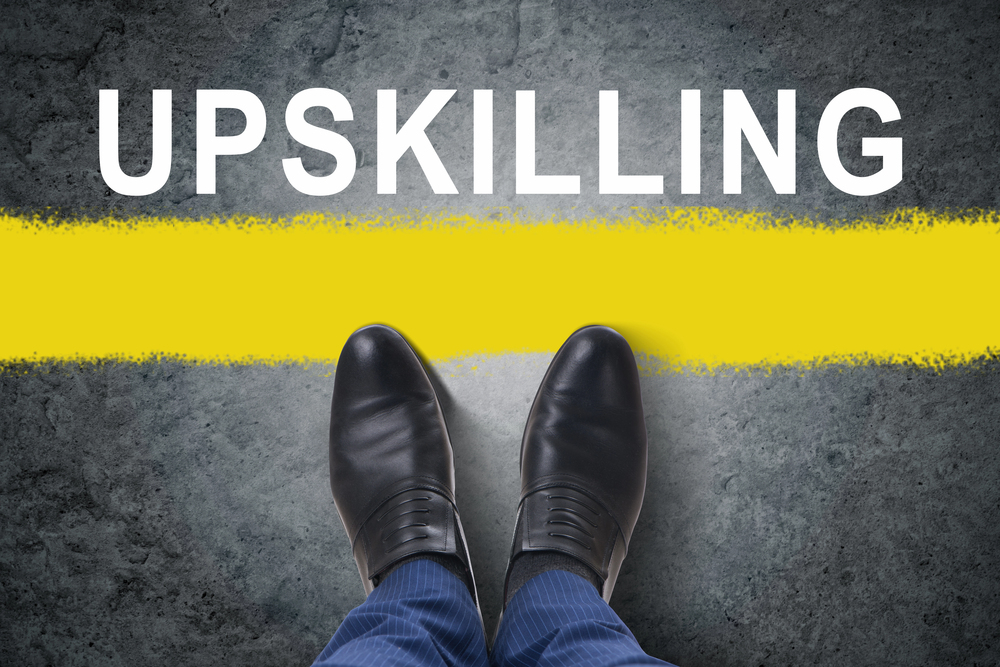
This is where upskilling and reskilling come in. As old habits and patterns become obsolete, it’s vital that we try to shift existing staff toward new ones. These should be more effective habits and patterns.
Boosting Productivity And Employee Engagement
This is a time of tremendous uncertainty as far as employees go. By offering the right training opportunities, you might be able to keep employees motivated and productive. Additionally, you may retain them more easily. This isn’t merely common sense – there’s a mounting pile of evidence behind the idea that training and perceived progress correlate strongly with retention.
According to recent Gallup polling, just under half (47%) of employees strongly agree that they have the skills they need to be exceptional in their current job. If your business can buck this trend, you’ll be more attractive to the best candidates. Furthermore, you will be better positioned to retain the best of your existing team.
Preparing Your Workforce For AI And Automation
Many companies in the United States are actively seeking to train staff to work alongside artificial intelligence. In some cases, job roles are being transformed almost beyond recognition. This isn’t always a direct result of AI in the workplace, but an indirect one. For example, in engineering roles, automation-related systems are quickly becoming central, along with traditional reed switches and other common components.
Reducing Hiring Costs And Improving Talent Retention
Bringing in new employees is resource-intensive. You’ll need to train those employees and bring them up to speed with the company’s culture. In today’s sluggish labour market, there’s no guarantee that you’ll be able to quickly fill a hole left by a departing employee.
Many of those employees being left behind by the pace of change are simply those who haven’t had the opportunity to pick up new skills. They may also have qualities and skills that are easily discounted in a headlong rush toward automation. It might be that you later come to regret that you didn’t do more to keep hold of them.
All of this underlines the importance of retaining through retraining!
Enjoyed this article? Add People Development Magazine as a preferred source on Google:
