



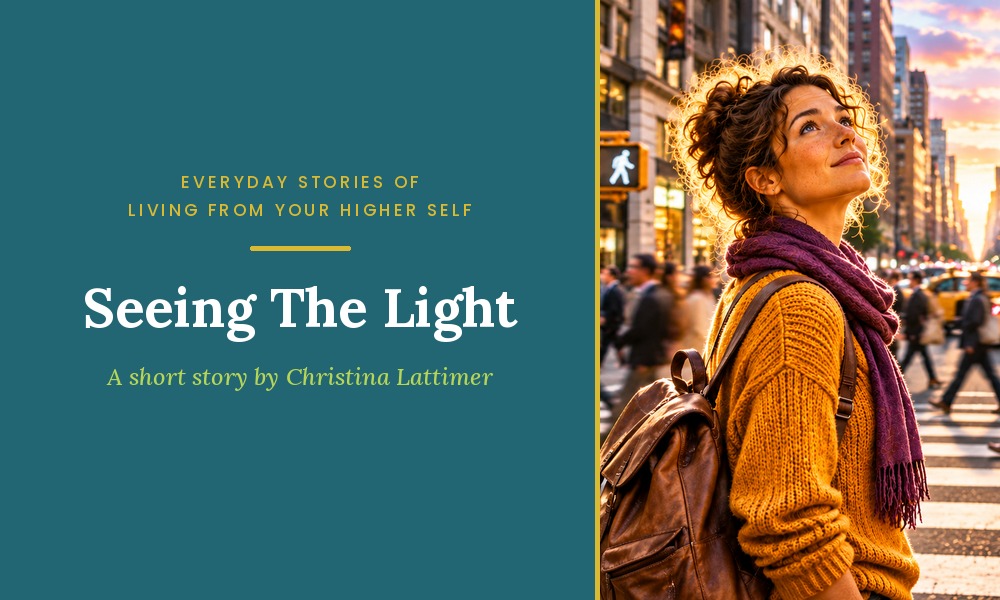
Every evening at ten past six, Nadia crossed the same junction. She moved through the routine without thinking. The path was so familiar she barely noticed it anymore. With her phone in one hand and her bag on her shoulder, she weaved through the crowd. When she paused, she answered emails as the crowd moved her along.
She was good at her job. She got promoted in the spring, went running on Sundays, and always had a podcast playing during any free moment. As long as she kept busy, the question stayed quiet. But when she stopped, it returned. Is this it?
One evening, as she reached the junction, her phone died halfway through a message to her manager. She stood at the curb, holding a blank screen. For the first time in years, she had nothing to look at.
So she looked up.
Noticing
The sun rested at the end of the avenue, perfectly framed by the buildings, filling the street with golden light. It shone on every face passing by. A man in a suit, jaw set, gripping his phone. A girl quietly crying into hers. A delivery rider with tired eyes. All of them were rushing, each carrying something.
For six years, Nadia had walked past these people every night, only seeing a crowd in her way. Now she noticed them, and something inside her softened. She wished good things for each of them.
Next to her, an older man in a flat cap was looking at the sun.
“Twice a year it lines up like that,” he said. “Most people never look.”
She remembered being nine, lying on the grass in her backyard, believing there must be a kinder, happier way for people to live. Her intuition had known it then. She had just stopped listening.
The next evening, her phone was fully charged. She put it away in her bag. While she waited for the lights to change, she looked at the people around her.
The story is fiction. The point of it isn’t.
Enjoyed this article? Add People Development Magazine as a preferred source on Google:
