




Sam had lived on Rowan Close for two years and knew exactly one neighbour by name, and that was only because of a parcel.
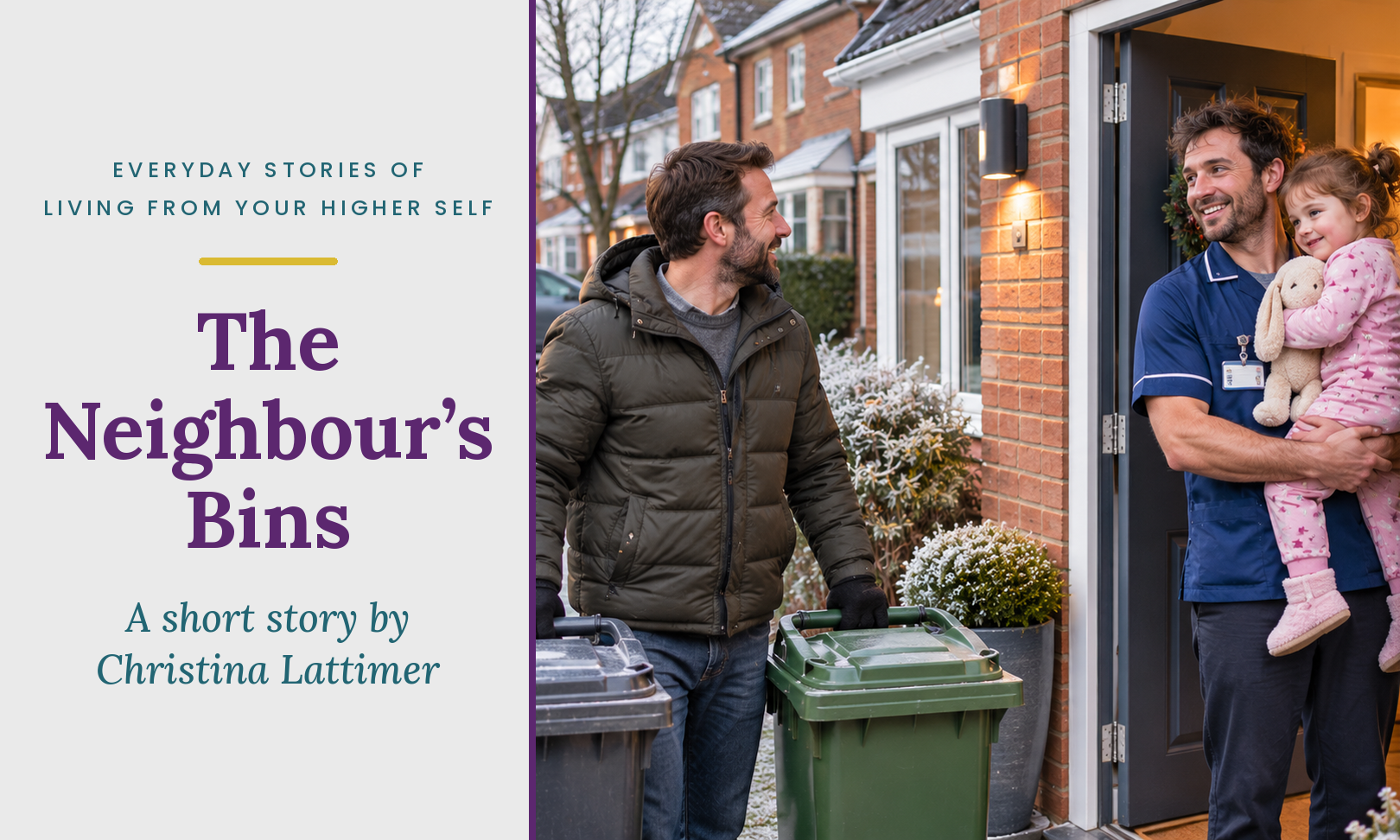
Every Tuesday the bin lorry came at seven. And every Tuesday evening, the bins outside number fourteen were still on the pavement, blowing over in the wind, until somebody tutted and stood them up. On the third Tuesday in November, Sam wheeled them back up the drive himself. It took thirty seconds. He half expected a knock on the door that night. A wave, at least. Nothing came.
The next week he did it again, and the week after. Still nothing. By the fourth week he caught himself standing at the window, waiting for the curtains opposite to move, feeling faintly hard done by.
He laughed at himself. He was doing a kind thing and then sulking because nobody had noticed. So he asked himself, honestly, why he was doing it. Not for thanks, it turned out. He just liked it. Thirty seconds of cold air, the street quiet, a small job done properly. That was enough.
He Stopped Watching
He stopped watching the window.
In January the door of number fourteen opened while he was halfway up the drive. A man in a care worker’s tunic stood there, grey with tiredness, a small girl on his hip.
“It’s you,” he said. “I’ve been trying to catch you for weeks. I’m on nights at the care home. I’m never back before the lorry. I thought it was the council.”
“No,” said Sam. “Just me.”
The man looked at him for a moment. “I’m Kev,” he said. “This is Ellie. Do you want a brew? I’ve just put one on.”
Sam had never been inside anyone’s house on Rowan Close.
“Go on, then,” he said.
The story is fiction. The point of it isn’t.
Read: How Unity Consciousness Changes Our View of Connection
Also read: Why Love Feels Like Something To Be Earned
Next story: The Other Team
Enjoyed this article? Add People Development Magazine as a preferred source on Google:
