

When a relationship is not working as we would like, most of us first look to see whether the other person is to blame. Sometimes that is exactly where we need to look. People do let us down, and sometimes we have to say what we need, ask for change or accept that the relationship cannot give us what we hoped it would.
But there is another question we do not often ask: what are we expecting our relationships to give us?
Sometimes we expect another person to make us feel secure, valued, understood or complete. When they cannot do that consistently, we assume there is something wrong with the relationship or with them. It may be that we are asking another person to provide something we first need to find within ourselves.
Three Kinds of Connection
Over the years, through my own experience and my work with others, I have come to recognise three levels of connection. This is not a scientific model; it is simply a distinction I have found helpful in understanding why we can have people around us and still feel lonely or disconnected.
Social Connection
Social connection comes from having other people in our lives. We work with people, make friends, spend time with family and share the ordinary events of the day. These interactions may not always be deep, but they still matter. Sometimes what we are missing is simply company, conversation and the feeling of being part of everyday life.
If we have become isolated, it can help to recognise this before looking for a more complicated explanation for how we feel. We may need more opportunities to be with other people.
Psychological Connection
Psychological connection is different. It is the feeling of being understood, accepted and able to be ourselves with another person.
We can spend an hour with someone and feel better because we felt heard and properly seen. Equally, two people can live together for years and still feel emotionally distant from one another. This is usually what we mean when we say we feel lonely even though we are not alone.
Connection with Our Own Higher Self
The third is our connection with our Higher Self, the inner connection this series is about.
When this connection is missing, we can feel as though there is no one within us to turn to. We look outwards for answers, reassurance and approval because we do not yet trust our inner guidance. We ask other people what they think, then ask somebody else when the answer doesn’t resonate.
Connecting with our Higher Self does not mean we no longer need other people. It means we stop expecting them to answer every question, remove every doubt or make us feel whole. We can still value their love, company and advice without making our well-being entirely dependent on what they give us.
Connection Through the Lens of Unity
When we view our connections through the lens of separation, we tend to focus on what we receive from them. Do I feel included? Does this person understand me? Do they value me? Are they giving me enough time, attention or reassurance? Without realising it, we can begin to measure the relationship by what it seems to say about us.
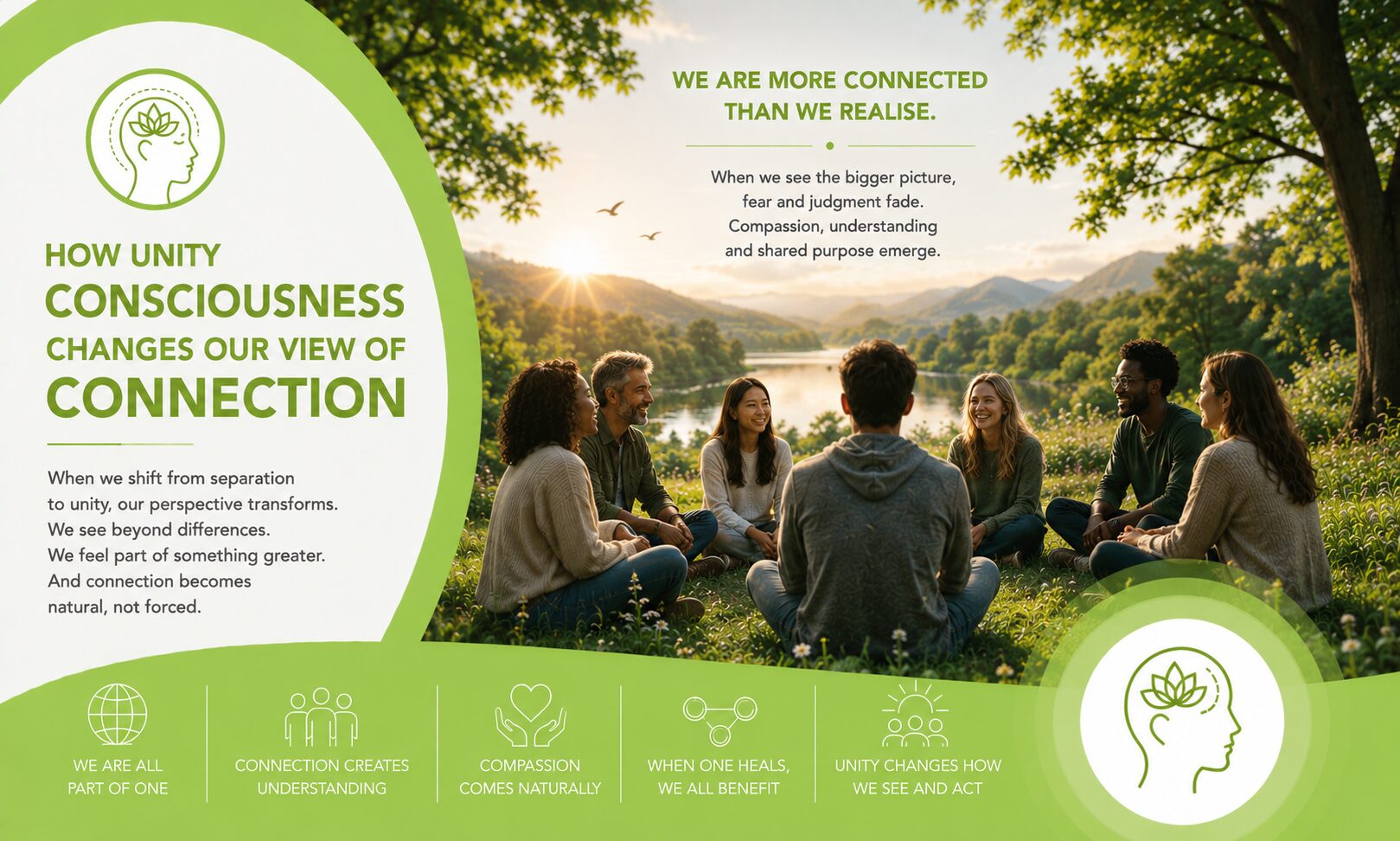
Unity Consciousness offers a completely different starting point. It suggests we are already connected, even when we do not feel it. Instead of looking to other people to give us a sense of belonging, we recognise that belonging is already part of who we are.
This changes how we experience all our connections. We can enjoy social contact without needing to be included in everything. We can value being understood without feeling rejected when someone does not understand us. We can listen to other people’s views without losing touch with our own inner guidance.
Our relationships still matter, and we still need love, company and understanding. The difference is that we are no longer asking other people to prove that we matter or to make us feel complete. We can meet them more openly because we are not constantly checking what their words and actions mean about us. We begin to experience connection as something we bring to a relationship, rather than something we have to persuade another person to give us.
Connection Does Not Require Agreement
When we stop asking our relationships to prove we belong, connection becomes possible even when we disagree. We no longer need another person to think as we do, to make the choices we would make, or to fully understand our point of view before we feel connected to them.
This does not mean agreeing with everything or pretending differences do not matter. It means we can disagree without immediately turning the other person into the problem. Instead of thinking, How can they possibly see it that way? we become more interested in understanding what has led them there.
We may still challenge what they say, make a different choice or decide we do not want a close relationship with them. Connection does not mean agreement, and it does not remove the need for boundaries. It allows us to see the person as more than the opinion, decision or behaviour we disagree with.
Why the Higher Self Won’t Take Sides
Your Higher Self operates from Unity Consciousness. It does not experience life through separation, comparison or conflict as the ego does. This is why, when we ask it for guidance, it rarely tells us who is right and who is wrong. Instead, it helps us see the situation more fully, including the fears, needs and misunderstandings on both sides.
At first, this can feel frustrating because we often want our Higher Self to take our side. Instead, it invites us to look beyond sides altogether. It does not ask us to ignore poor behaviour or abandon healthy boundaries. It helps us respond from understanding rather than from the need to make somebody else wrong. Once we understand that this is the perspective from which our Higher Self speaks, its guidance becomes easier to recognise.
Asking a Relationship to Prove We Matter
I once worked with a woman who was convinced that her boyfriend’s plans for his future meant he was not committed to her. Yet as we explored the situation, it became clear that she wasn’t reacting to his plans so much as to the fear that they would take him away from her.
When she stepped back and looked at the relationship from her Higher Self’s perspective, everything changed. Instead of seeing two people whose different plans threatened the relationship, she saw two connected people with different needs. She realised he could love her and still make his own choices. Interestingly, he did not change. What changed was what she was asking the relationship to prove. Once she no longer needed it to confirm that she mattered, she could see much more clearly what was actually between them.
Meeting People Wherever They Are
When we recognise Unity Consciousness, we become better able to meet other people wherever they are. When both people communicate from their Higher Self, the wisest and most loving parts of each meet, and there is far less need to defend.
I used to find it difficult to spend time with people who saw life as dog-eat-dog or who had no interest in the idea of a Higher Self. Living from the perspective of unity has changed that. I now see that we are all on different paths, learning different lessons at different times. My role is not to persuade anyone to see what I see, but to connect from the best part of myself. Whether they meet me there is for them to decide, not me.
“When we recognise Unity Consciousness, we become more able to meet other people wherever they happen to be.”


Try This: Connect from Your Side Only
Over the next few days, choose one ordinary interaction with someone you don’t know well: a colleague, neighbour or shop assistant.
Before you speak, notice whether you are hoping for anything in return, even if it is only a smile, approval or acknowledgement. Then, for a moment, assume you are meeting the wisest part of them and connect with the wisest part of yourself. Don’t try to change them. The only thing you are changing is where you relate from.
Afterwards, ask yourself:
- What was I hoping they would give me?
- Did I find myself judging how the interaction had gone?
- How did the conversation feel when I wasn’t looking for anything in return?
You may discover that the greatest change in your relationships begins when you stop asking them to prove anything about you.
Before we can accept the idea of Unity Consciousness, we must first really see the World of Separation and how our reactions to that world can lead to suffering.
Articles In Unity Consciousness
What Is Unity Consciousness? How Seeing Beyond Separation Changes Everything
- How Unity Consciousness Changes Our View of Connection
- The World of Separation
- Living From Unity Consciousness: What Changes When You See People Differently
- Why Boundaries Get Easier When You Stop Blaming
- If Everyone Is Connected, Why Is the World Like This?
This article reflects my personal experiences and the Living From Your Higher Self philosophy, and isn't intended as a substitute for professional psychological support. If reading it brings up painful past experiences or causes you significant distress, please seek help or consider working with a qualified therapist.
Enjoyed this article? Add People Development Magazine as a preferred source on Google:
