

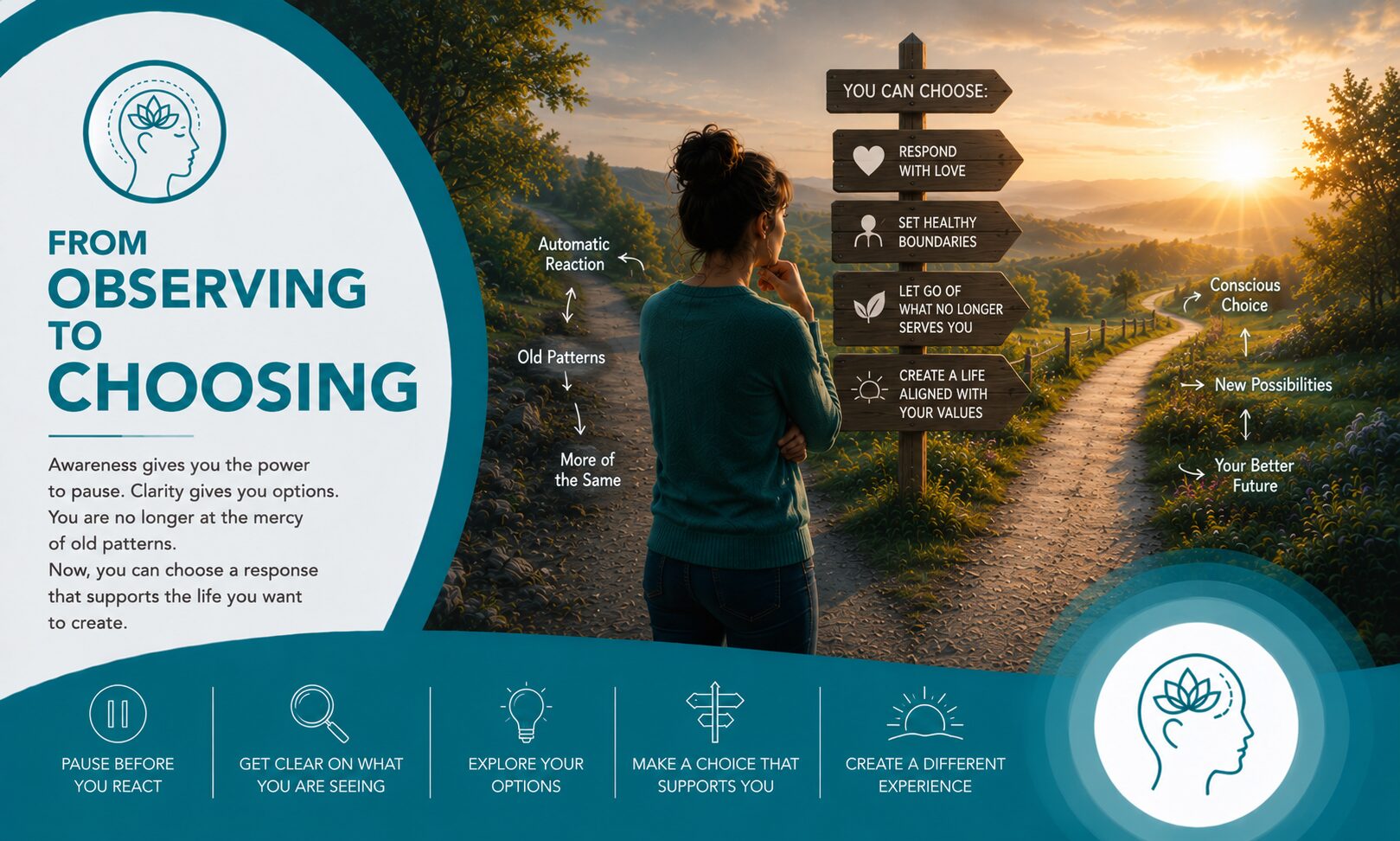
Finding the belief behind my money pattern was a relief, but it didn’t change anything. A few days later, I made a decision about what I believed. I decided I no longer had to be poor.
I didn’t feel particularly convinced. I didn’t wake up brimming with self-worth. I looked at the original belief, recognised it as a conclusion drawn by a frightened child in a house where money was a worry, and decided I was no longer going to run my life by it.
The spreadsheet was an ordinary response, and exactly the right one. The old belief had kept me from looking at bills or balances because, underneath it all, I assumed that knowing where I stood would make no difference and that looking only increased my anxiety. The new choice made looking possible.
What surprised me was how easy it was. I had tried to get on top of my money before and never lasted more than a fortnight. This time I didn’t have to force myself to do it, because I was no longer doing it against a belief that said it wouldn’t make any difference.
That was my first real lesson in how change actually works.
Why Fake It Till You Make It Only Sometimes Works
Most of us try it the other way round. We change the behaviour and leave the belief exactly where it is. Sometimes that’s enough. If the belief is mild, or we already half doubt it, doing the thing gives us evidence, and the belief changes to fit. This is what “fake it till you make it” really describes, and it works more often than the cynics allow.
It stops working when the belief is old, deep and unexamined. Then we are asking ourselves to keep doing something that a part of us still believes was never meant for us, and that is exhausting. While things are going well, the belief stays quiet. But the first time we are tired, disappointed or facing something difficult, it is still there, telling us the same thing it always has. I know this because I tried it that way once, at considerable cost.
Changing the Behaviour but Not the Belief
As I described earlier, I set up my own business partly to prove something about myself, without really asking whether I wanted the life that came with it.
As the need to prove myself faded, so did the importance I had attached to the business.
This is why changing behaviour on its own is not always enough. We can make a completely different choice and still be driven by the same old belief beneath it. Sustainable change comes when the behaviour and the belief begin to change together. Otherwise, we can end up building a new life around an old story.
Awareness Is Not Enough
Recognising a belief is an important step, but it does not necessarily mean we will stop living by it.
I know this from experience. I could explain where some of my beliefs came from and recognise when they were operating, but that did not always stop me from following them.
Understanding a belief and choosing to live differently are two separate things. Awareness gives us the opportunity to make that choice, but we still have to make it. The old belief may have been operating for decades. It has become familiar, and we can continue to respond from it without even realising it. This is why we need to do more than recognise it. We need to begin considering what we would rather believe and how we want to act.
Is This Belief Really True?
Once we recognise a belief, we can begin to question it. We are not looking for fault or deciding that everything we have believed was wrong. We are asking whether the belief is still true and whether it helps us live the way we want to live.
Take a belief and write it down in your own words. Then ask yourself: Is this actually true? Sometimes the answer may be that it was understandable to believe it when you were younger. Perhaps your circumstances gave you every reason to reach that conclusion. But that does not mean it has to remain true for the rest of your life.
For example, the belief that certain opportunities were not for people like me made sense at the time, given the world I knew. But as an adult, I could begin to question whether those limitations still applied.
We do not need to replace an old belief with something we cannot genuinely believe. If you are struggling financially, telling yourself you are wealthy is unlikely to help. You know your circumstances, and pretending otherwise can create more conflict. Instead, look for something you can believe. It might be: Other people from backgrounds like mine have learned to manage money and build financial security. Perhaps I can learn to do that too. This is a much more useful place to begin.
Starting With One Small Choice
Choosing a different belief does not mean we have to transform our lives overnight. It means starting to make choices that align with what we now want to believe.
Start with something ordinary rather than the most difficult belief you have ever held. Choose one that comes up regularly, so you have opportunities to practise. For example, if you believe you must always keep other people happy, you might begin by saying no to something you genuinely do not want to do. If you believe you are not capable enough, you might apply for an opportunity you would normally dismiss. If you believe your needs do not matter, you might express a preference instead of automatically going along with someone else.
You do not have to get it right every time. The important thing is to notice when the old belief is making the decision and allow yourself to choose differently. Each time you do that, you gain a little more experience of living from the new belief. Over time, that experience can help the new way of thinking feel more natural.
Why It Takes Practice
We touched on neuroplasticity earlier in the series. Our brains become more familiar with the thoughts and behaviours we repeat, while patterns we use less often can become less automatic. The practical point is that we may have spent thirty or forty years responding in a particular way. We cannot necessarily expect a different response to feel natural after trying it a few times.
At first, acting differently may feel uncomfortable or even unlike us. We might know we want to set a boundary, for example, but still feel guilty when we do so. That does not mean the boundary is wrong. It may simply mean we are doing something unfamiliar. The more often we practise responding from a different belief, the more familiar that response can become. We are not forcing ourselves to think positively. We are giving ourselves the chance to practise living differently, again and again.
When the Old Belief Returns
We should also expect old beliefs to resurface from time to time. I still notice this in myself, particularly when I am tired, under pressure or dealing with something that touches an old insecurity. I can understand a belief perfectly well and still find myself reacting to it before I have had time to think. The difference now is that I am more likely to recognise what is happening.
At first, we may only notice afterwards. We might spend days worrying about something before realising that an old belief has been influencing us. With practice, we may begin to recognise it sooner, sometimes even as the reaction is happening. That is progress. It does not mean we will never experience the old thought or feeling again. It means we are less likely to accept it automatically as the truth. And when we do fall back into an old pattern, we can recognise it and choose again. There is no need to turn it into another reason to criticise ourselves.
Understanding Ourselves Rather Than Fixing Ourselves
This is an important distinction. We are not trying to repair something defective about ourselves. We are learning how our beliefs developed and deciding whether we still want to live by them. Many of the conclusions we reached earlier in life were understandable. They may have helped us cope with the circumstances we were in. Some of them also gave us qualities we value and want to keep.
But we are no longer limited by the understanding we had when those beliefs first developed. We can recognise what we learned, appreciate what helped us and begin to choose differently where it no longer serves us. This is what makes change possible. We do not have to reject who we have been. We can become more conscious of who we want to be now.
“The important thing is to begin noticing when the old belief is making the decision and allow yourself to choose differently.”


Try This: One Belief, One Step
Choose one belief you have begun to recognise in yourself. It does not need to be a major one. Something that comes up in ordinary life is a good place to start.
Write the belief down in the words you would naturally use.
Ask yourself whether it is true now, or whether it is something you learned from earlier experiences.
Think of a different belief that feels both helpful and believable to you.
Ask yourself what one small thing you might do differently this week if you were living from this new belief.
Then, when the opportunity arises, try doing that one thing.
You do not have to change everything at once. The purpose is to begin experiencing what it is like to choose from a different understanding of yourself.
Knowing your own mind is one thing. What changes next is how you see everybody else, and that is where we turn to Unity Consciousness.
Articles in Self-Awareness
Self-Awareness: The Gateway to Your Higher Self
- Why You React the Way You Do
- How Beliefs Shape Your Experience
- The Only Thing You Have to Do Is Be Willing
- Turning From Experience To Observation
- From Observing to Choosing
Enjoyed this article? Add People Development Magazine as a preferred source on Google:
