




For six years, since Dad died, Claire had done Sunday lunch.
Every week. Roast, two veg, Yorkshires for her brother Paul because he sulked without them, and an apple crumble for Mum. Five adults, three children and a dog, in a kitchen built for four.
Paul never offered to have it at his. Mum never asked if Claire minded. Claire never said.
By November she was dreading Sundays from Wednesday onwards.
On Thursday night she wrote down what she was going to say. It came out in a rush, two sides of paper. Paul could at least bring a pudding. Mum always said how tired she looked but never did anything about it. Nobody had noticed she hadn’t sat down for a whole Sunday since 2020. Nobody even cleared the plates.
She read it back. Every word of it was true. Every word of it would start a row.
So she picked up a pen and crossed out everything that was about what they had or hadn’t done. The pudding. The plates. The sitting down. Paul.
The Boundary
What was left was one sentence.
From January, I’m going to do Sunday lunch once a month, not every week.
It looked very small on its own. It also looked, she realised, like something she could actually say.
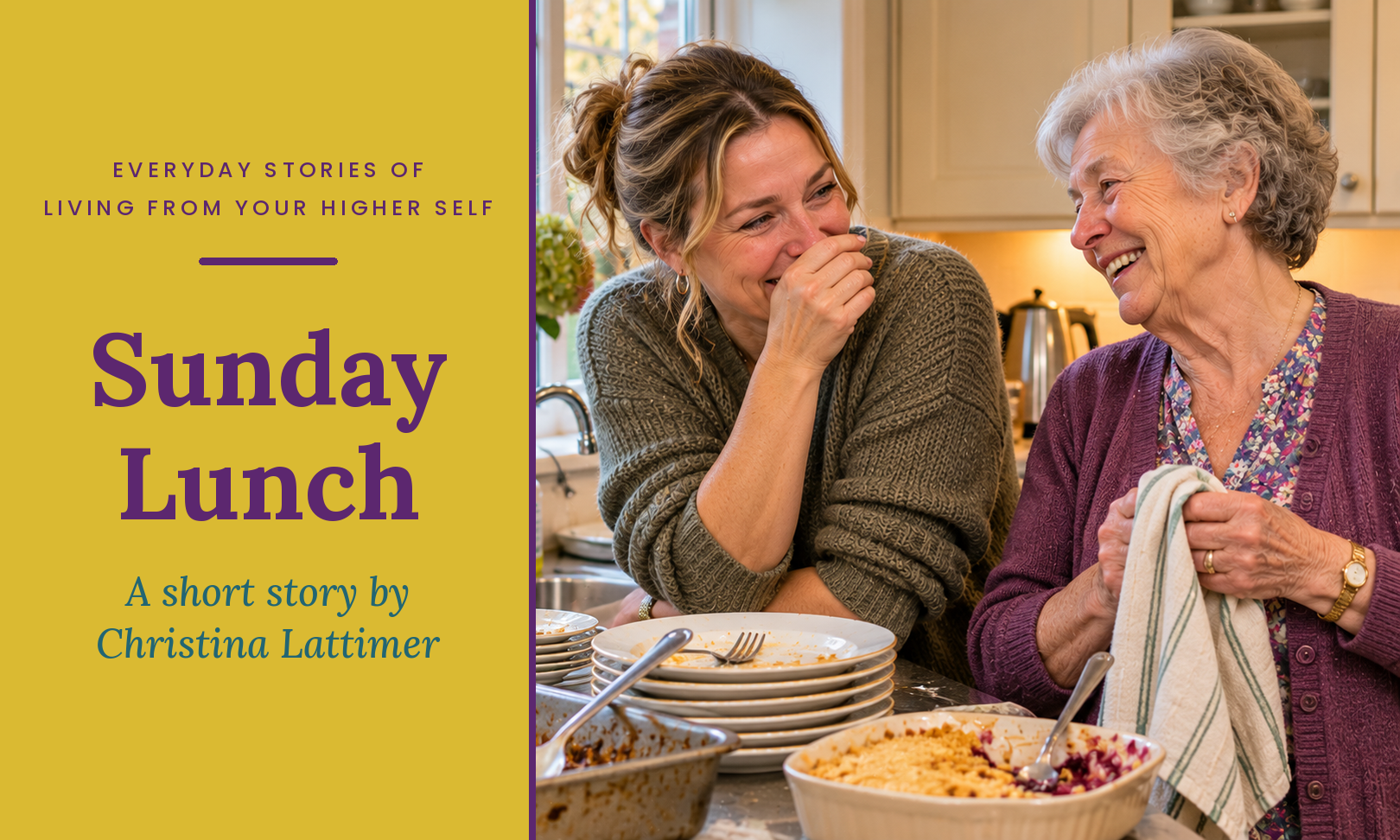
She said it on Sunday, while Mum was drying up.
“Just once a month?” said Mum.
“Just once a month.”
Claire waited for the hurt look. It didn’t come. Instead, Mum hung the tea towel on the oven door and was quiet for a moment.
“I’ve been wanting to have you all round mine again,” she said. “I didn’t like to say. I thought you liked doing it.”
Claire laughed, and was surprised to find she was close to tears.
“I did, Mum,” she said. “I just need to sit down sometimes.”
The story is fiction. The point of it isn’t.
Read: Why Boundaries Get Easier When You Stop Blaming
Also read: Experiencing Relationships from the Perspective of Separation
Next story: The News at Ten
Enjoyed this article? Add People Development Magazine as a preferred source on Google:
