

I was only eight or nine when I decided to attend Sunday School on my own. The rituals of the service didn’t interest me; what did was a deep sense of awe that drew a familiar, loving presence even closer.
Around the same time, I discovered the local library. When my parents first took me there, I was mesmerised by the array of books. Little did I know this library would open a lifelong path towards discovering my Higher Self. Decades later, a defining marker on that path was M. Scott Peck’s The Road Less Travelled. It was the book that finally made me realise what I had been missing for all those years.
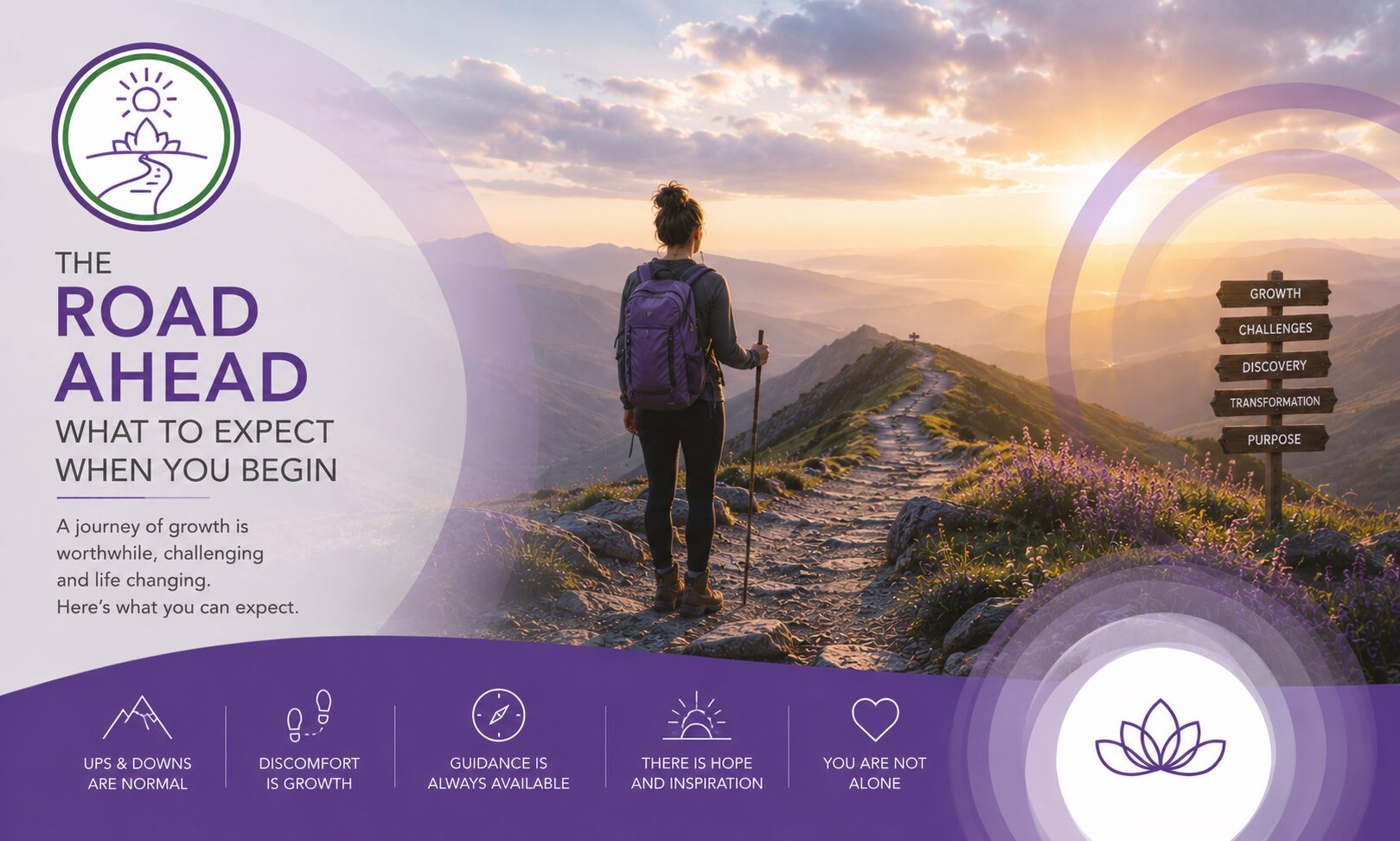
This journey can be exciting. It is also unsettling, confusing and at times deeply uncomfortable, and we need to accept the discomfort to progress. Often, we begin because we feel there must be a better way to live. Perhaps life has become exhausting, success hasn’t brought the happiness we expected, or we want to understand ourselves better.
Whatever the reason, there is no quick fix. It’s a lifelong process of learning, letting go of old beliefs and discovering who we really are. As we learn more about ourselves, we become better equipped to deal with whatever comes next.
Growth Rarely Feels Comfortable
Discovering our Higher Self means questioning beliefs and habits we may have held for years. Even when they no longer serve us, familiar ways of thinking can be hard to change.
As we become more self-aware, we recognise the stories we have long believed about ourselves and how fear shapes our decisions. We can then choose differently. This can be uncomfortable because it challenges how we have always seen ourselves.
As a child, I often felt alone. My mother was unwell and wasn’t emotionally available. My dad did his best, but I learned early to rely on myself. I found it difficult to express my needs, so I kept them to myself.
I became very independent and resilient, but I also took on too much responsibility. Life was often stressful because I wouldn’t ask for help. When I did, I felt guilty and indebted to whoever helped.
Once I understood where this belief came from, I could begin to change it. I discovered that most people are happy to help, that asking for help can strengthen relationships, and that I could accept kindness without feeling I owed something in return.
Why Old Hurts Can Surface as We Grow
We might expect personal growth to bring peace, but increased awareness can also surface feelings and old hurts we have spent years avoiding. This doesn’t mean anything has gone wrong. Sometimes we need to confront the emotions we have been holding on to before we can move on.
Healing doesn’t mean forgetting painful experiences. It means letting go of the suffering we continue to hold on to. The Emotional Compass, introduced later, helps us understand our feelings and recognise when our thinking is adding to our pain.
For me, healing has been a lifetime’s work. Losing my parents and my best friend brought periods of grief I still feel, although the intensity has softened over time.
One of the hardest parts was grieving for my inner child, the little girl who felt alone and abandoned. I couldn’t face that pain until later in life. Recognising my Higher Self gave me the confidence and understanding to deal with it. The lightness and inner peace I’ve found as a result have changed how I experience life.
Why the Same Lessons Keep Coming Back
One of the biggest surprises on this journey is that growth doesn’t happen in a straight line. We have wonderful weeks when everything seems to make sense. Then something unexpected happens, and we wonder whether we’ve learned anything at all.
Life presents us with fresh opportunities to practise what we’ve learned. Similar situations return again and again. Yet each time we meet them with a little more awareness, a little more compassion and a little less fear. This is why I call it Life School: every experience becomes another lesson rather than another punishment.
I’ve learned to give myself a break over the most ingrained habits, the ones I know full well don’t serve me, yet I keep repeating. I still get annoyed with people I have no business getting annoyed with when things don’t go my way: the late delivery, the moment of incompetence. These days I manage not to show it, so I no longer upset anyone, but I still feel the burn inside. I am still working on it.
Your Relationships Will Become Your Greatest Teachers
As our awareness deepens, we begin to see our relationships differently. Instead of asking, Why are they doing this to me? we gradually find ourselves asking, What is this situation helping me see about myself?
Sometimes the lesson is about boundaries. Sometimes it is about forgiveness, courage or self-worth. Relationships stop being obstacles and become opportunities for growth. They become mirrors that reveal where healing is still possible.
Whenever I feel a negative emotion about what someone says or does, I know I’ve hit a learning situation.
One of the most recent has been the political views of some of my family, and I’m sure I’m not alone in this. To say we are poles apart is an understatement. At first, I would get animated, wanting to bring out all the evidence to prove them wrong.
We didn’t fall out, but we came perilously close. Then I realised I didn’t have to be right. I didn’t have to persuade anyone to adopt my view. Indeed, they, like us all, were entitled to their own views. Instead, I set aside the need to agree and valued our connection more than the argument. I still hold my views, and I’ll state them when asked. Yet I’m now aware enough not to try to impose them on anyone.
Inspiration Begins to Replace Struggle
Although the journey is challenging, it also grows increasingly beautiful. We begin to notice moments of calm that were once absent. We respond differently, recover from setbacks more quickly, and discover an inner wisdom that quietly guides our decisions.
Eventually, life becomes less about constantly trying to control everything and more about responding with clarity and trust. We may still experience sadness, grief or disappointment, because these are part of being human. What changes is that suffering no longer has quite the same hold over us.
I hold strong values about how people should be treated, and at work I was always acutely aware when decisions failed to take the human equation into account. Whenever I encountered unfairness, favouritism or people being ignored, I would feel anxious and annoyed. A colleague once said to me, “I don’t know what happens, but sometimes your attitude changes without any warning.” I knew, of course, what it was: a value I held dear was being violated. Now that I can see the pattern, the reaction has lost its grip. More importantly, once I stopped reacting so strongly when I felt my values were being trampled on, I was often inspired to respond with love and understanding.
“We begin noticing moments of calm that never used to exist. We react differently and recover from setbacks more quickly.”

Try This: What Are You Curious About?
Before you go any further, consider what has brought you here. Perhaps there is a pattern you keep repeating, a part of yourself you want to understand better, or a sense that there might be another way to experience life.
Write down one thing you genuinely want to understand about yourself. You do not need to know the answer. Just notice the question you are bringing with you.
There will be days when the old way of thinking seems easier. There will be times when growth feels painfully slow. Keep going. Every act of forgiveness, every moment of self-awareness, every choice to respond with love instead of fear is quietly changing you. That’s when you begin to understand what’s waiting for you on the other side.
Articles in The Journey
Living From Your Higher Self: The Journey to Your True Self; Introduction
- The Question That Changed My Life
- Why Personal Growth Isn’t Enough
- Your Teachers Are Closer Than You Think
- The Road Ahead: What to Expect When You Begin
- What’s Waiting on the Other Side? Discovering the Peace You Already Carry
Enjoyed this article? Add People Development Magazine as a preferred source on Google:
Enjoyed This? . This Essential Guide brings the whole framework together in one place, free to download.
