

Overview
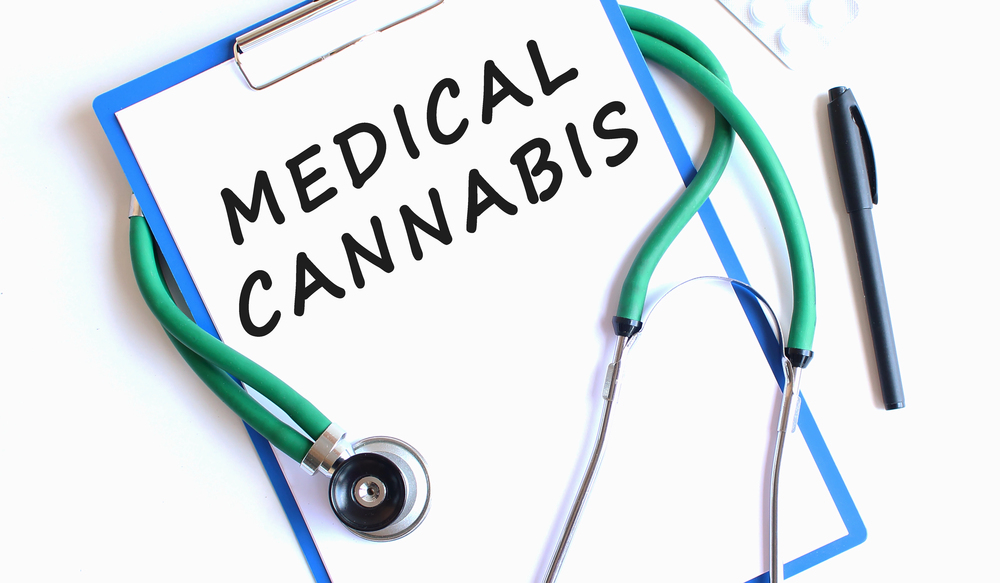
Medical cannabis workplace policy is becoming essential as more employees hold valid prescriptions. This article explains how HR teams can manage legal risks, distinguish medical from recreational use, handle drug testing, and implement fair, compliant policies that balance employee rights with workplace safety across evolving US and UK regulations.
Introduction
Workplace conversations about medical cannabis have moved from the margins to the mainstream. In the US, forty states plus Washington, D.C. operate medical cannabis programs. HR leaders are increasingly likely to encounter employees who hold a valid MMJ certification. In the United Kingdom, private prescription pathways have expanded since 2018. While the numbers remain smaller, the direction of travel is similar.
For HR teams managing multinational workforces, or for UK organisations watching the US precedent, the question is no longer whether to develop a position on medical cannabis. It is how to do so without exposing the business to discrimination claims, safety risks, or inconsistent treatment of employees.
Distinguishing Medical from Recreational Use
What Certification Actually Means
A patient holding a medical cannabis certification has consulted with a licensed physician, presented a qualifying medical condition, and been accepted into a regulated programme. The treatment is documented, the patient is registered with the relevant state authority, and qualifying conditions in most jurisdictions are tied to specific medical diagnoses. Common medical conditions such as chronic pain, anxiety disorders, post-traumatic stress disorder, or particular neurological conditions qualify in most states.
Why the Legal Distinction Matters
Several US states have explicit anti-discrimination provisions for certified patients in employment contexts. The UK Equality Act 2010 may also apply where the underlying condition meets the legal definition of a disability and cannabis forms part of a prescribed treatment plan. Treating a certified patient the same as an employee using cannabis recreationally exposes the business to claims it is rarely well-positioned to defend. The costs of that exposure tend to outweigh the costs of getting policy right in the first place.
Drug Testing in the Modern Workplace
The Pre-Employment Question
Pre-employment cannabis screening is increasingly under scrutiny. Several large US employers have publicly dropped THC from their pre-employment drug panels in recent years, citing the practical reality that a positive test typically reflects off-duty use days or weeks earlier rather than any current impairment. The talent-pool argument is also significant: in jurisdictions with widespread legal access, a strict THC screen meaningfully shrinks the candidate pipeline without a corresponding gain in workplace safety.
Impairment Versus Detection
Standard urine tests detect THC metabolites, not active impairment. An employee can return a positive result long after the effects of cannabis have worn off. For HR leaders, this argues for separating two policy questions that are often conflated: whether an employee uses cannabis at all, and whether an employee is impaired at work. The first is a lifestyle question with limited employer relevance outside safety-sensitive contexts. The second is a fitness-for-duty question that matters in every workplace.
Safety-Sensitive Roles
The exception to all of the above is safety-sensitive work. Roles involving the operation of heavy machinery, commercial driving, aviation, certain healthcare procedures, or other contexts where impairment poses immediate risk sit in a different category entirely. In the United States, federal Department of Transportation regulations prohibit any cannabis use by commercial drivers regardless of state law, and aviation and healthcare have parallel federal restrictions.
Patients seen by an MMJ doctor online receive counsel on responsible use as part of the consultation, including the well-established guidance that cannabis should not be used while driving, operating heavy machinery, or performing other safety-sensitive tasks. The certification confirms medical eligibility for the state program. However, it does not override an employer’s drug-free workplace policy or applicable federal regulation. HR leaders should expect certified patients in safety-sensitive positions to comply with their employer’s requirements. Policies should make that expectation explicit rather than implied.
Reasonable Adjustments and Disclosure
For roles outside the safety-sensitive category, the question becomes whether and how to support an employee who discloses medical cannabis use. Good practice typically includes treating disclosure confidentially within the HR function, engaging with the employee about reasonable adjustments where the underlying condition warrants them, avoiding any presumption that certification implies impairment at work, and documenting both the conversation and any adjustments agreed.
Employers should also recognise that most employees do not disclose. Surveys show that patients are reluctant to discuss medical cannabis even with their own healthcare providers, let alone their employers. A workplace that signals openness without requiring disclosure tends to surface issues earlier than one built around mandatory reporting.
Three Steps for HR Teams
First, audit your existing drug and alcohol policy. Does it distinguish medical from recreational use? Will it identify which roles are safety-sensitive and which are not? Can it address impairment at work as a question separate from off-duty consumption? If any of these answers is no, the policy may be exposed.
Second, train line managers on the distinction. Common policy failures occur frequently in how managers respond when an employee’s positive test result arrives. A clear policy poorly applied at the front line is functionally the same as no policy at all.
Third, build a working relationship with employment counsel in every jurisdiction where you operate. MMJ case law is evolving in the US. A position that was defensible last year may not survive next year. Annual policy reviews, informed by current legal advice, are not optional in this space.
The medical cannabis question is not going away. HR teams that develop a jurisdiction-appropriate position will spend less time managing the issue when it arrives at their desk.
Enjoyed this article? Add People Development Magazine as a preferred source on Google:
