


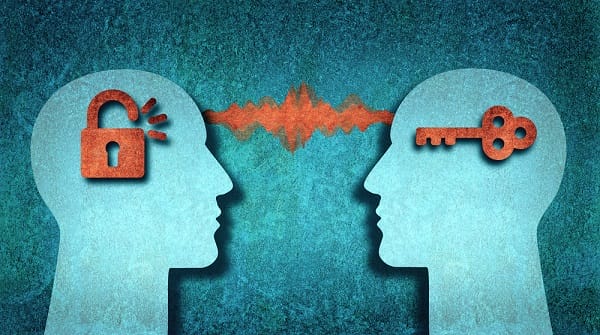
In our fast-paced and interconnected world, having strong communication skills is like having a secret superpower. The key to those communication skills is psychological safety. Whether in the workplace, at home or out with friends, the ability to convey thoughts, ideas, and emotions is imperative to forge genuine connections. It’s not just about spouting fancy words or mastering the art of small talk; it’s about building bridges of understanding and fostering a sense of genuine camaraderie.
Part of exploring the human experience is asking ourselves some big questions such as this one from Oxford Scholar, Theodore Zeldin: “When will we make the same breakthroughs in the way we treat each other as we have made in technology?” Sure, we can look at evolutionary anthropology, we can look at the discipline of psychology and with that we’ve developed assessment tools evolving from Hippocrates’ work, and countless other examples. But what Zeldin is suggesting is that we haven’t catapulted our treatment of one another profoundly. And I agree with him.
I work within organizations frequently; I work with leaders, teams and individuals. Forget about the old-school “command and control” leadership style that attempts to motivate through fear and intimidation. Nowadays, it’s all about treating each other with respect and kindness, both in the boardroom and at the water cooler. Too many organizations have bet on a cut-throat, high-pressure, “take no prisoners” type culture to drive their financial success – but let’s face it, that ship has sailed. The focus needs to shift to the whole person. We need to acknowledge and prioritize how we treat each other in the world and work.
A Place of Safety
So, let’s talk about the secret sauce to effective communication: psychological safety. Individuals must be able to express themselves safely and openly without fear of judgment, ridicule or reprisal. Imagine a place where individuals feel safe to express their thoughts, opinions and emotions without the fear of negative consequences. It’s these kinds of environments where people are more likely to take risks, collaborate openly and engage in constructive discussions. I’ve been on highly psychologically safe teams and the complete opposite in the very same organization. What was the difference? The leader, hands down. Psychologically safe teams have leaders that create an environment where we feel we can contribute, show up and be comfortable with being our true selves.
Psychological Safety Is A Human Right
Psychological safety isn’t a new idea; it has circulated in organizational psychology since the 1960s. In 1990, psychologist William Kahn was describing the concept as “being able to show and employ oneself without fear or negative consequences of self-image, status or career”. Later, Harvard professor Amy Edmundson took the concept more mainstream, declaring that psychological safety “is a shared belief that the team is safe for interpersonal risk-taking.” The concept gained new prominence in 2016 when Google created Project Aristotle and identified psychological safety as the single most important determinant of a team’s success. Interest in the concept is giving way to demand for the condition. Employees now see psychological safety as a term of employment as a human right.
Friends At Work
My take on psychological safety? It’s all about treating your colleagues like friends you genuinely care about and always acting with kindness. I’ve spent a significant portion of my career in the employee engagement arena, specifically the employee engagement survey space. And you know what? The survey I toyed with didn’t encompass one very important question that one competitor did. Any guess what that question was? It was the simple “Do you have a friend at work?” Turns out, that question is a game-changer.
Why, you ask? Well, real friendships aren’t just the icing on the career cake; they’re the cake itself and contribute greatly to our long-term career success, health and happiness. They fulfil our basic human needs for belonging, purpose, confidence and that warm, fuzzy feeling of contentment. At the end of the day, you may talk about your work experience with your friends, family, or spouse but they don’t really ‘know’ the players, do they? Your friend at work does and can show genuine empathy throughout the rollercoaster ride of ups and downs in your workday. That safe space is what leaders should be encouraging throughout the team.
Trust is a one-on-one relationship whereby psychological safety requires that each team member trusts one another as a unit. We tend to box up our work lives and personal lives, but here’s the kicker: our fundamental needs stay the same whether we’re at home or in the office. After shelter and food, we still crave deep human relationships. As the modern workweek continues to expand and respond to the new demands of our ‘always-on culture’ faster than you can say “inbox zero”, befriending our colleagues isn’t just a nice-to-have – it’s a must-have.
Creating Psychological Safety
Leaders take note. Creating a culture of psychological safety is the key to employee experience, employee engagement and group productivity. It’s your golden ticket. It’s like rolling out a red carpet for open, honest communication and building real relationships, in and out of the office.
So, what’s the secret recipe for cultivating psychological safety in the workplace where interpersonal relationships are fostered, and good communications skills are developed? It’s instilling psychological safety in your leaders where they model the behaviour. It’s also a mix of, trust, respectful and continuous real-time feedback. There is a dash of vulnerability and a whole lot of active listening. Whether in the workplace or our personal lives, individuals thrive when they feel safe to express themselves openly and honestly. Psychological safety is about more than just better communication skills. If you follow this recipe, you’ll be contributing to a more empathetic and compassionate world. One where everyone is free to be their authentic selves.


