


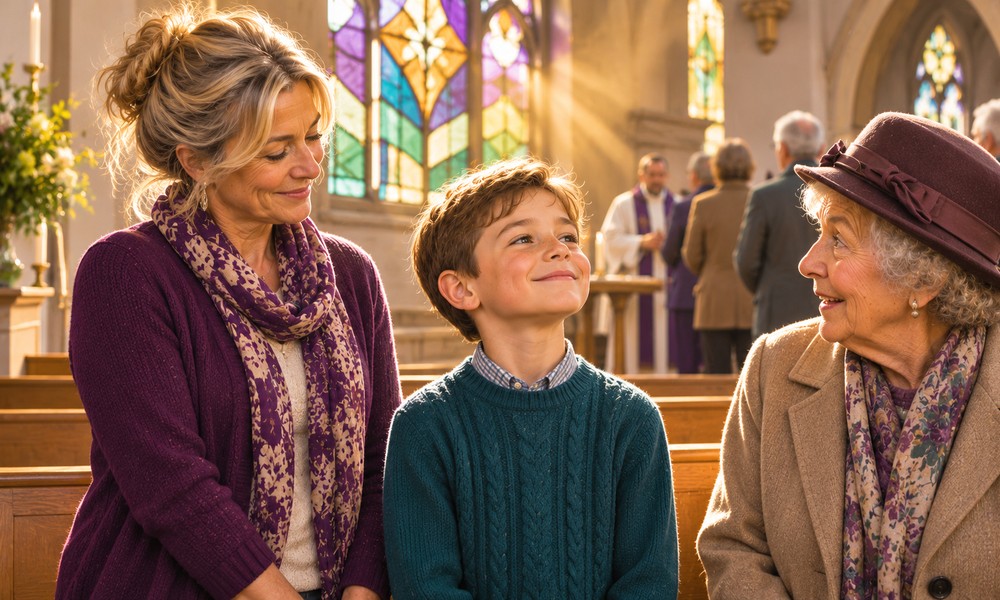
When my son was about eight, I decided to take him to church. As a young child, I had taken myself off to church. I have never forgotten the reverence and peace I felt there, so I wanted to see whether he might enjoy it too. We went for quite a few weeks. He liked Sunday School, but he was less keen on the service, particularly Holy Communion.
One Sunday, as the congregation began queuing to receive Communion, an older lady standing beside my son turned to him and asked whether he was going to take part. He flushed, embarrassed to have the spotlight on him, and shook his head. She shook hers too and told him that if he didn’t participate, he would not be blessed. “I’m blessed every day,” he replied.
I felt immensely proud of him. Despite his embarrassment, he was sure enough of himself to say what he felt to be true. He didn’t let someone else’s belief override it. The lady may well have believed she was acting in his best interests, but the idea that a child could be denied a blessing for not taking part in a ritual troubled me. He already felt blessed, and he didn’t need anyone to tell him what he had to do to earn it.
Do You Have to Believe in God to Connect With Your Higher Self?
I don’t believe you do. I use the term Higher Self because it is accessible regardless of our spiritual or religious beliefs, and I describe it as the part of us through which we connect with something wiser and more loving than our conditioned thinking. That connection is always available to us, but our fears, judgements and old beliefs can hide it from view.
For some people, prayer is how they become aware of it. For others it might be meditation, time in nature or a moment of deep love, and some people experience it without ever calling it God or anything spiritual. Nobody needs to describe themselves as religious or spiritual to show compassion, generosity and wisdom. We may interpret our experiences differently, but that doesn’t mean the qualities we are experiencing are different. Religion can be one way of becoming aware of our Higher Self, but I don’t believe it is the only way.
What I Mean by God
For many years I ignored and largely dismissed God and religion, despite those childhood visits to church. I described in Connecting to Your Higher Self the moment that changed, and when I finally recognised what I believed to be a higher power, I chose to call it God. Others might say Source, the Universe or love, and the name matters much less to me than the nature of what I believe it to be.
I believe God is an unconditionally loving presence that is everywhere and goes beyond any religion or ritual. I believe it lives within every one of us, whether we recognise it or not, and that it doesn’t favour one person over another or withhold love because someone hasn’t followed a particular ritual or belief. We don’t have to earn that love or ask permission to reach it. If it is truly everywhere, there is nowhere it is not, and if it is unconditional, there is nobody it is denied to. This is the foundation of my understanding of the Higher Self, and it is why I say I found God, though not in the way I understood God as a child.
Where A Course in Miracles Fits
People sometimes ask about A Course in Miracles, because I mention it often. It is a spiritual work first published in 1976, and much of what I have learned came from it. It uses Christian language, but it isn’t a religion and doesn’t ask anyone to join anything. At its heart are the ideas that we each choose between fear and love in how we see the world, and that forgiveness is how we undo our sense of separation from each other and from God.
It is my own practice, and it will take me a lifetime. But you don’t need to study it, or believe what it teaches, to use anything I write about. Living From Your Higher Self takes the practical layer, the choice between fear or love that anyone can make, and leaves the rest for whoever feels drawn to it.
The Value of Religion
I have enormous respect for the part religion plays in many people’s lives. It brings comfort in hard times, a feeling of belonging, and extraordinary acts of kindness, and for many people it is how they experience a connection with God. I honour that completely. Equally, I respect those who don’t believe in God at all. We each build our worldview from our upbringing, relationships and experiences, and we are all entitled to it.
When Beliefs Become a Way of Controlling Others
What I find difficult is when beliefs about God, religion or a higher power are used to make people feel fearful, guilty or inadequate for not sharing them. This isn’t only true of religion. It applies to spiritual philosophies too, including my own. Even when we mean well, trying to persuade others can stop us from honouring their ability to think for themselves.
This is where the ego thought system gets involved. It wants to be right, it feels threatened when it is challenged, and it enjoys feeling superior to people who see things differently. Even living from our Higher Self can be taken over by the ego when we start believing we are more aware or enlightened than someone else. Whenever we use our beliefs to feel superior, we reinforce the very separation we are trying to heal.
Unity Doesn’t Need Everyone to Agree
One of the foundations of this philosophy is Unity Consciousness, the recognition that beneath our different identities and beliefs, we are connected. That doesn’t mean we all have to think alike. If our perception of unity depends on everyone agreeing with us, it is conditional. The real test comes when we stay loving towards someone whose beliefs are completely different from ours.
If I believe God is within every person, I have to recognise that presence in someone who disagrees with me, including someone who doesn’t believe in God at all. Otherwise I am putting my own conditions on something I believe is unconditional. Honouring someone’s worldview doesn’t mean agreeing with it, and we can respect their right to their beliefs without accepting any right to impose them on us.
Love Doesn’t Depend on What We Believe
I believe passionately in what I write, but I have no wish to tell anyone what they must believe. I would rather offer tools people can try for themselves. Instead of arguing about whose worldview is right, we could ask whether our beliefs bring us peace, whether they help us live more lovingly, and whether they leave other people free to be who they are.
I still think of my son saying “I’m blessed every day.” In my understanding of God today, he was no less blessed for not taking Communion, and the lady who urged him to was no less worthy of love because her understanding differed from ours. I don’t need to diminish religion to believe that God goes beyond it, and I don’t need anyone to share my understanding to feel secure in it. If love is truly unconditional, then even our beliefs about it can’t be a condition of receiving it.
This article reflects my personal experiences and the Living From Your Higher Self philosophy, and isn't intended as a substitute for professional psychological support. If reading it brings up painful past experiences or causes you significant distress, please seek help or consider working with a qualified therapist.
Enjoyed this article? Add People Development Magazine as a preferred source on Google: