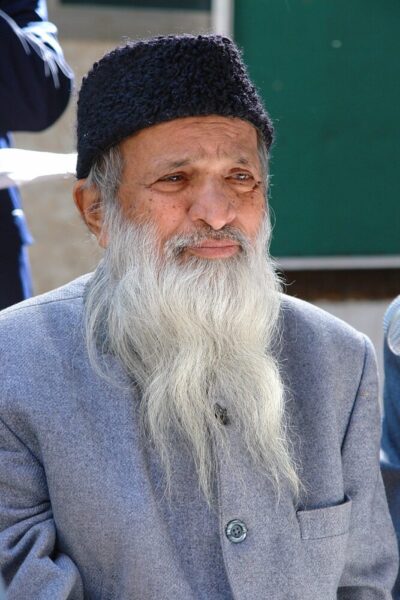
Why Abdul Sattar Edhi Is Remembered as One of the Greatest Humanitarians
Abdul Sattar Edhi dedicated his entire life to serving humanity. He was known to sleep on the concrete outside his clinic so he could be available to anyone in need, day or night. He collected unclaimed bodies, washed and buried them with dignity, and rushed to the frontlines of disasters, terror attacks, and accidents to offer help. Even in death, he donated all his organs so his mission could continue.
Edhi’s story is not only one of compassion but also of humanitarian leadership, showing the world that ordinary individuals can build extraordinary legacies of service.
Who Was Abdul Sattar Edhi?
Edhi appeared as a frail, simple man dressed plainly, with no trace of wealth or status. Yet, he became the most respected figure in Pakistan and one of the greatest humanitarians in history. Without formal education, he developed a philosophy rooted in the belief that human rights to help one another outweigh all other rights.
Recognised by the Guinness World Records as the founder of the world’s largest ambulance service, Edhi passed away in 2016, leaving behind a legacy of compassion that transcends borders.
The Edhi Welfare Foundation – Humanity in Action
Founded in Karachi, the Edhi Welfare Foundation has grown into Pakistan’s largest welfare organisation and one of Asia’s most extensive humanitarian networks. Its services include free nursing homes, orphanages, clinics, women’s shelters, rehab centres, and international relief efforts.
From helping victims of Hurricane Katrina in the United States to running refugee programmes in the Middle East and Africa, Edhi proved that humanity knows no boundaries.
The Defining Moment of Service
In 1957, when a flu epidemic struck Karachi, Edhi set up tents, offered free immunisations, and provided care. His tireless efforts won the hearts of the people, who began to support him with donations. With this trust, he built the foundation that continues to save millions of lives today.
A Life of Simplicity and Integrity
Despite managing the largest humanitarian network in Pakistan, Edhi and his wife Bilquis lived in a modest two-room home. They considered themselves ordinary people doing what was necessary, never chasing wealth or recognition.
Awards and Global Recognition
Edhi received countless awards, including the Ramon Magsaysay Award, the Lenin Peace Prize, the Nishan-e-Imtiaz, and multiple Nobel Peace Prize nominations. Yet, he always insisted that no title was higher than that of a servant of humanity.
His Philosophy: Humanity Above All
Edhi often said: “No religion is higher than humanity.” He believed education was meaningless if it failed to instil kindness and human values. His life was a reminder that true leadership is not about power, but service.
Why Abdul Sattar Edhi’s Legacy Matters Today
Edhi’s story demonstrates that anyone, regardless of education or resources, can make an impact. He began with almost nothing yet built one of the world’s greatest humanitarian networks through determination, compassion, and trust.
In a world driven by competition and division, Edhi’s philosophy of service offers a model for leaders, businesses, and communities to follow. His life remains an enduring reminder that humanitarian leadership is the highest form of leadership.