Uber’s 2017 scandal demonstrated how a sole focus on performance can harm a company’s reputation. For those unfamiliar with the story, Uber’s management team sacrificed the fundamental values of integrity and respect to prioritise short-term profits over long-term performance. Sure, you want to be profitable, but profitability is not only about meeting performance targets. Profitability, more than anything else, is driven by motivation. To achieve great success, you need to nurture extraordinary performance.
A Motivated Workforce
If you don’t create a culture of respect and meet the needs of the person behind the employee number or role, you’re negatively impacting performance. This is partly due to the decline in productivity caused by unethical behaviour, primarily due to the high and expensive staff turnover.
For extraordinary performance, you need highly motivated employees.
Extraordinary Performance Reviews
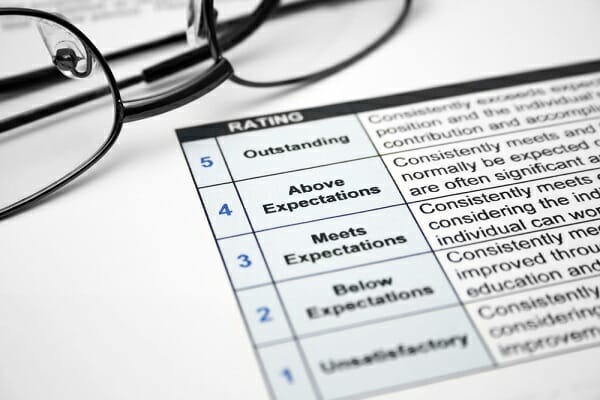
However, first, let’s address the issue with traditional performance reviews. As mentioned, they focus primarily on challenging, tangible targets. When you meet the numbers, whatever it takes, you get a good review and are rewarded generously. When you behave ethically and do the right thing but miss the targets, even slightly, you get punished.
Uber is an extreme example, but they are far from an isolated case. It was unfortunate that someone dared to speak up and uncover the scandal. In most companies, it’s accepted and allowed by most employees, who are too afraid to speak up.
But there’s a far more significant issue with performance reviews, which are closely linked to the field of psychology and the birth of positive psychology. Traditionally, psychology focused on identifying problems until Martin Seligman, at the turn of the century, suggested that it should, in turn, focus on human strengths.
He realised that the more you look for problems, the more you will find. This is extremely demotivating, as we all strive to be good inherently. Constantly hearing how what we are doing is not good enough is not exactly a recipe for a highly motivated team.
The birth of positive psychology was a radical shift in the right direction. The focus shifted to identifying strengths and enabling individuals, which resulted in extraordinary performance.
How to Cultivate an Extraordinary Performance Culture
Leveraging the field of positive psychology, here are five ways to nurture extraordinary performance:
1. Focus on behaviours, not targets
Increase our customer base by x users. Sell y products by the end of the financial year. Reduce costs by z.
Targets are easy. They’re tangible, and they directly translate to the bottom line. It’s fair, with everyone measured equally, and there’s little room for misinterpretation. The numbers don’t lie! It’s the results that matter. Or is it?
Results do matter, of course.
However, I’ve found that I get much better results when I focus on the behaviours more than the targets. When the desired behaviours—like responsibility, communication, and trust—are reinforced, the results are a natural outcome. More often than not, challenging targets are exceeded as a result.
2. Reward what you want to see; don’t punish what you want to see less of
How exactly do you measure and reward responsibility? How do you rate trust that doesn’t seem biased, depending on how likeable you are? Or how do you quantify good communication?
Admittedly, it’s much more complicated to reward behaviours than results. That’s part of why targets are used as a performance measure. Measuring values takes much more thought and attention than simply pulling a few reports from a system.
As a leader, you need to constantly look for the desired behaviours in your team and recognise the employee when they demonstrate this behaviour. A private thank you for boosting motivation, followed by a public recognition to prove to the rest of the organisation what behaviours are desirable.
Most people want to be good and exceed expectations; it’s just that they don’t always know what the organisation is looking for. Therefore, it’s essential to communicate this clearly every day. Recognising desired behaviours should be part of the company culture.
3. Reinforce the change
Deciding something is a good idea is key for change to stick, and doing it once isn’t good enough. Reinforcement is key. Essentially, you are building new habits, which takes time and repetition.
Consciously practice the new employee recognition model actively until it becomes a habit. Constantly remind employees to recognise their peers until it becomes ingrained in the culture.
4. Coach in real-time
Traditional performance reviews are less effective than coaching. This is partly because they are a forum where the employee has little say in the targets, measures, and sometimes (and I dare say mostly) the ratings. It is mainly because they happen long after the actual events that lead up to the review.
A performance review’s primary purpose is to provide feedback and align the team with the organisational goal. It simply doesn’t make sense to wait six months or a year to do this.
From my experience, real-time team or personal coaching is more effective. Addressing an event—good or bad—as it happens provides immediate and valuable feedback, allowing the team to realign instantaneously.
Why wait?
5. Focus on strengths
I’ll never forget my first performance appraisal with a “problem employee”. He actively sabotaged me, purposefully not doing tasks I needed for important meetings where I would be made to look bad in front of the Executive Team, and not having the results.
The first few times, I ignored the passive-aggressive behaviour until I couldn’t ignore it anymore. We participated in a conflict resolution session facilitated by the CEO, and both of us were allowed to raise our concerns. His reaction was fueled by a feeling of personal injustice, having applied for my position but not getting it. I suddenly gained a deeper understanding and developed more compassion.
After the session, the resentment and passive-aggressive behaviour only increased, and eventually, he moved to a different team.
However, I was still responsible for his performance appraisal and decided to focus on his strengths. As he walked into my office, I could see doom and gloom all over his face, expecting a bad review. A few minutes into the performance appraisal, I could see the shock and surprise give way to a sense of accomplishment as he listened to everything he had done right during the year.
Before I even got a chance to discuss his weaknesses, he started pointing them out himself and offering commitments on how to prevent them in the future.
From that day on, he was my most loyal supporter and always put my deliverables at the front of the work queue. This was only because I chose compassion, not revenge.
Conclusion
The goal of performance management is to provide feedback and set targets to enhance and align the performance of individuals and teams. Challenging targets are not an effective tool for increasing performance, as extraordinary performance is driven by motivation more than anything else.
Positive performance reviews do not intend to exclude the negative side of personal or group performance. Like positive psychology, they are designed to complement rather than replace it.
For a highly motivated workforce, try a positive performance review next time and see what happens.