Overview
This article explores leadership as an experiential journey of self-awareness and growth. It highlights the attitudes of higher self leaders, including empathy, acceptance, positivity, and empowerment. Practical insights show how these behaviours, grounded in emotional intelligence and authenticity, foster stronger teams, resolve challenges, and create inclusive, values-driven workplaces where people thrive.
Introduction
Like learning to drive, leading and managing people is an experiential journey. On this journey, leaders have the opportunity to learn a great deal about themselves. They learn how they think, how they manage emotions, and whether their inner dialogue serves them or not. Without a doubt, experience leading a team creates a growth mindset, including a willingness to learn and become more self-aware. Higher self-leaders will have personally grown, whether in a work or domestic environment. Here, we discuss the leadership attitudes of people who operate from their higher self.
My entrance onto the leadership stage occurred when I was promoted into the role, having stood in for the team leader from time to time. Although I had practised leading people, I hadn’t experienced it adequately until I had to do it for real. Developing the dexterity, personal capability, and experience to lead a team successfully took a long time. Although I had pretty reasonable interpersonal skills to start with, unfortunately, these skills did not equip me to deal with the complexities I faced at times. And so I had to learn continually.
Leaders Emerge At Different Stages
People enter leadership roles at various stages in their lives. Some people in leadership roles often have a lot to learn about people because they haven’t had the experience of leading and managing people. This can mean their leadership attitude may not be as mature as that of someone who has had extensive experience. You can’t learn to operate from the higher self from a leadership or management textbook.
Junior leaders can be appointed because they have demonstrated leadership skills or are proficient in their specific field. Some senior leaders may have initially had a distinguished career as professionals. Perhaps a doctor, lawyer, or accountant, and then they’ve gone on to lead people with the same specialisation. An entrepreneurial business owner may be highly successful and have acquired commercial business acumen and savvy long before they employ and lead people. Their level of people skills and leadership attitude will often determine their success as a leader. The most successful entrepreneur or mature professional may find the going very tough indeed if they have not honed their leadership skills within themselves.
People Skills And Emotional Intelligence
One of the most impactful people skills is emotional intelligence. Wikipedia describes emotional intelligence as” the ability to identify, assess, and control the emotions of oneself, of others, and of groups.” If you’ve ever been in an office where you have seen people have tantrums like two-year-olds, or where the rumour mill is the most reliable communication channel, or where a prevalent blame culture prevails. You know that the skills of the emotionally intelligent are somehow lacking. Even worse, if conflict is commonplace and your people aren’t firing on all cylinders or are openly disengaged, then you may have a problem that stems from limited or poor emotional intelligence. All is not lost, however, because emotional intelligence can be developed; it just takes experienced emotionally intelligent leaders to show the way.
Emotional intelligence is one of the key skills of higher self-leaders. This is because they can allow, identify, assess and regulate emotions to get the best possible outcome.
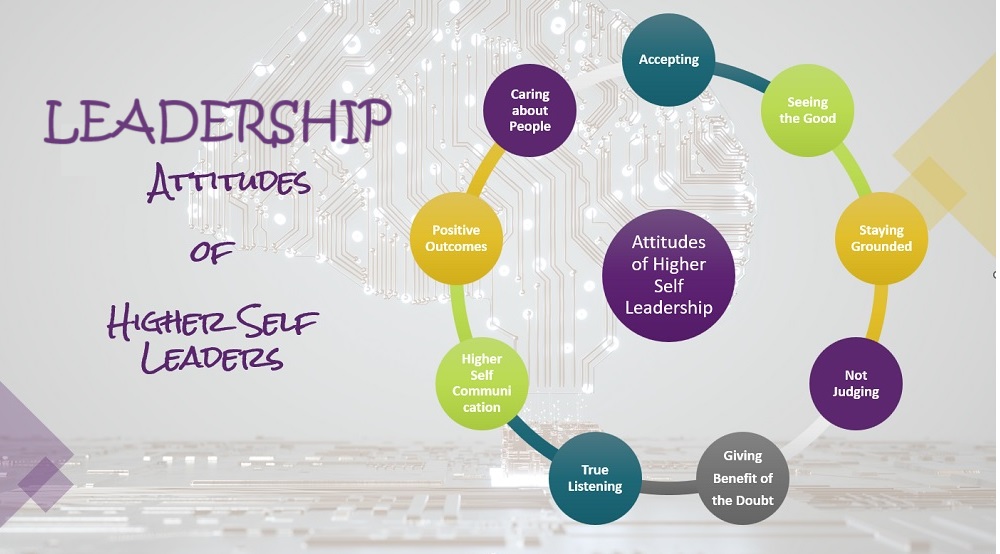
Leadership Attitudes of Higher Self Leaders
I have worked with and supported many leaders. I have led and managed teams locally, regionally and nationally. During this time, I practised and observed leadership attitudes and behaviours which have been the most successful in getting the best out of a team. These attitudes and behaviours are most commonly adopted by leaders who are tapped into their higher selves. They have experienced and strived to find ways that work. As a result, they have the best people skills.
Accepting People as They Are
A pivotal leadership attitude is accepting team members as they are, and understanding that each individual brings unique strengths and challenges to the table. Leaders who embrace this attitude do not seek to alter fundamental personality traits. Instead, they focus on helping team members develop skills and strategies that enhance their work-life balance and personal growth. This leadership attitude celebrates diversity in thought and approach, seeing it as enriching the team’s potential. By appreciating the distinct characteristics of each individual, leaders foster an environment of acceptance and understanding, which is crucial for building a cohesive and dynamic team. This approach fosters a diverse and robust work environment, where every member’s unique contributions are valued, resulting in innovative solutions and a more enriching work experience.
Seeing the Good in Others
Leaders who adopt the leadership attitude of seeing the good in others believe in the inherent worth and potential of every team member. This attitude is fundamental in fostering a positive work environment. Leaders who see the good in others work to unearth and nurture the positive core of each individual, even when their behaviours may not immediately reflect it. They understand that everyone has a higher self and strive to help team members tap into it. This doesn’t mean accepting poor behaviour; instead, it involves recognising that people are capable of improvement and often perform better when they understand and align with their higher selves. By focusing on the inherent goodness and potential within their team, these leaders create a supportive and nurturing environment where everyone is motivated to give their best and grow.
Staying Grounded When Facing Negativity
Incorporating a leadership attitude of staying grounded in the face of negativity is crucial for leaders navigating challenging situations. Leaders who master this attitude do not internalise negative feedback or reactions from others; instead, they maintain a core of tranquillity and peace. They are adept at facing criticism constructively, using it as a stepping stone to enhance their leadership and team dynamics. This leadership attitude involves a balanced approach to handling negative situations – staying detached enough not to be overwhelmed by them, yet engaged sufficiently to address and resolve them effectively. By staying grounded, leaders are better equipped to help their team navigate through negativity, turning challenges into opportunities for growth and positive change.
Not Judging
Developing a leadership attitude of not judging is one of the more challenging yet rewarding aspects of effective leadership. Leaders who practice this approach avoid making hasty judgments about people or situations. Instead, they assess circumstances based on their effectiveness and potential outcomes. This non-judgmental stance prevents the creation of negative energy and unproductive labelling, allowing leaders to remain focused on finding solutions. By avoiding judgment, leaders create an environment where team members feel safe to express their ideas and make mistakes, knowing they will be guided towards improvement rather than being criticised. This leadership attitude promotes an open, inclusive, and supportive work culture, where problems are approached with a mindset geared towards growth and solution-finding.
Giving Others the Benefit of the Doubt
A crucial leadership attitude is giving others the benefit of the doubt. Leaders who practice this understand that jumping to conclusions or crafting negative narratives without complete information can be detrimental to team morale and trust. They recognise that most team members are doing their best within their circumstances. They know gaps in performance or behaviour often have justifiable reasons. This leadership attitude fosters a culture of trust and understanding, where team members feel valued and fairly treated. Leaders who give the benefit of the doubt are more likely to inspire loyalty and honesty in their teams. This is because their approach shows a commitment to fairness and a willingness to understand before making decisions. This attitude is fundamental in creating a positive and supportive work environment. An environment where team members are motivated to do their best. Where they feel confident that their efforts are recognised and appreciated.
True Listening
The leadership attitude of authentic listening extends beyond merely hearing words; it involves a deep understanding of the perspectives and feelings of team members. Leaders who excel in authentic listening create a space where every individual feels heard and understood. This level of attentiveness allows leaders to connect with their team on a deeper level, fostering trust and respect. Authentic listening is a skill that requires setting aside one’s own biases and preconceptions to grasp the viewpoints of others fully. This leadership attitude is vital in resolving conflicts, guiding decision-making, and nurturing a collaborative work environment. When leaders truly listen, they demonstrate respect for their team’s opinions and experiences, which in turn encourages open communication and a stronger, more unified team.
Helping Others Communicate from Their Own Higher Self
Leaders who help others communicate from their higher selves prioritise fostering positive and constructive communication within their teams. This leadership attitude involves responding neutrally to negative behaviours, such as anger, and understanding that such reactions often stem from a place of stress or misunderstanding. Leaders with this attitude guide team members to reframe negative emotions and communicate in a way that reflects their best selves. This approach ensures that conversations remain productive and focused on positive outcomes, even in challenging situations. By consistently modelling and encouraging communication from a higher self, leaders build a team culture that values respect, understanding, and constructive dialogue.
Attempt to Always Achieve a Positive Outcome
A key leadership attitude is always striving for positive outcomes in any situation. Leaders who embody this mindset believe that there is always a path to a win-win solution, even if it requires patience and creativity. This attitude drives leaders to look beyond immediate challenges and focus on the long-term benefits for their team and organisation. They understand that sometimes giving situations and individuals space to evolve is necessary for achieving the best possible outcome. By always aiming for positive results, these leaders instil a sense of optimism and possibility in their team, fostering a culture where challenges are seen as opportunities for growth and innovation.
Caring About People
Caring about people is a fundamental leadership attitude that recognises the interconnectedness between the leader and team members. Leaders who genuinely care about their people consistently demonstrate kindness and support, even in challenging situations. This leadership attitude goes beyond professional responsibilities; it’s about showing genuine concern for the wellbeing and personal growth of team members. Such leaders recognise that caring for others has a profoundly positive impact on the entire team’s morale and productivity. By being empathetic and compassionate, these leaders create a work environment where team members feel valued and supported, which in turn fosters loyalty, engagement, and a strong sense of community within the team.
Empowering Others
Empowering others is a critical leadership attitude that centres on trusting and valuing the abilities of team members. Leaders who practice empowerment give their team the autonomy to take initiative and make decisions. This leadership attitude fosters a culture of innovation and self-reliance, where team members feel confident in their abilities and motivated to contribute their best. By empowering their team, leaders facilitate a dynamic work environment where creativity and personal responsibility are encouraged. This approach not only enhances individual performance but also drives the collective success of the team, as members feel more invested in the outcomes of their work.
Nurturing Growth
Leaders who nurture growth focus on the continual development and advancement of their team members. This leadership attitude involves a commitment to providing opportunities for learning and professional growth. By investing in their team’s development, leaders demonstrate a belief in their potential and a dedication to their success. This approach includes offering training, mentorship, and constructive feedback, all designed to help team members reach their full potential. A leader who nurtures growth creates a culture of continuous learning and improvement, where team members are encouraged to expand their skills and knowledge, leading to a more skilled and adaptable team.
Practicing Empathy
Practising empathy is a vital leadership attitude that involves understanding and sharing the feelings of others. Empathetic leaders create a supportive and understanding work environment. This leadership attitude goes beyond mere sympathy; it’s about genuinely putting oneself in another’s shoes and understanding their perspective. Empathetic leaders are better equipped to handle team conflicts, provide adequate support, and foster a positive team culture. By showing empathy, leaders build trust and strong relationships with their team members, which are essential for effective collaboration and team cohesion.
Collaborative
Fostering a collaborative environment is a key leadership attitude. Leaders who value collaboration understand that the collective effort of a team is greater than the sum of its parts. This leadership attitude involves encouraging teamwork, valuing diverse perspectives, and creating opportunities for joint problem-solving. By promoting collaboration, leaders build a culture of shared responsibility and mutual support. This approach not only enhances the team’s problem-solving capabilities but also fosters a sense of community and belonging among team members, leading to increased motivation and job satisfaction.
Offering Support and Guidance
Offering support and guidance, especially during challenging times, is an essential leadership attitude. Leaders who excel in providing support are seen as reliable sources of strength and guidance for their teams. This leadership attitude involves being available and approachable, offering assistance and advice when needed. By being supportive, leaders help their team navigate through difficulties, providing the necessary resources and encouragement to overcome obstacles. This approach not only helps in resolving immediate challenges but also builds a resilient and capable team, prepared to face future challenges with confidence.
Encouraging Open and Honest Communication
Encouraging open and honest communication is a critical leadership attitude. Leaders who prioritise transparent communication create an environment where team members feel safe to express their thoughts and ideas. This leadership attitude is about more than just sharing information. It’s about fostering a culture of trust where honest feedback is valued and encouraged. By promoting open communication, leaders ensure that all team members are informed and engaged. They are aligned with the team’s goals and objectives. This approach leads to better decision-making, stronger team relationships, and a more inclusive and dynamic work environment.
Cultivating Inclusion
Cultivating an inclusive and diverse culture is a key leadership attitude. Leaders who prioritise inclusion understand the value of diverse perspectives and experiences. This leadership attitude involves actively seeking and valuing different viewpoints. Thus creating an environment where all team members feel respected and included. By fostering inclusion, leaders enhance the team’s creativity, problem-solving abilities, and overall performance. This approach benefits the team. It also contributes to a more equitable and just work environment, where everyone has the opportunity to contribute and succeed.
Role Modelling
Role modelling integrity and ethics is a fundamental leadership attitude. Leaders who lead by example set the standard for behaviour and ethics within their team. This leadership attitude involves consistently demonstrating high moral standards in all actions and decisions. By serving as a role model, leaders fostered a culture of trust and credibility, where ethical behaviour is the standard. This approach is crucial for maintaining a positive reputation and nurturing a work environment where honesty and integrity are valued and expected.
Adapts to Needs
Adapting to individual and team needs is a hallmark of dynamic leadership. Leaders who are flexible and responsive to their team’s unique strengths and challenges create a supportive and effective work environment. This leadership attitude involves understanding and addressing the specific needs of each team member, tailoring approaches to optimise performance. By being adaptable, leaders ensure that the team can respond effectively to changing circumstances and challenges. Thus, maintaining productivity and morale even in the face of adversity.
Celebrating Success
Celebrating success and learning from failures is an important leadership attitude. Leaders who recognise and celebrate achievements foster a culture of appreciation and motivation. This leadership attitude is about more than just acknowledging accomplishments. It is about using successes and setbacks as opportunities for learning and growth. By celebrating success and constructively addressing failures, leaders encourage a growth mindset within their team. In this way, effort and progress are valued, and challenges are viewed as opportunities for growth and development.
Is Positive and Optimistic
Maintaining an optimistic outlook is a key leadership attitude. Leaders who embody positivity and optimism inspire their team to stay motivated and focused, even in challenging situations. This leadership attitude involves seeing the potential in every situation and maintaining a hopeful and constructive outlook. By being positive and optimistic, leaders create an energising and motivating work environment, where team members are encouraged to approach challenges with confidence and a can-do attitude. This approach not only enhances team morale but also drives innovation and creativity, leading to greater success and fulfilment.
Adopting the Leadership Attitudes
Depending on your ability to stay connected to your higher self, adopting these attitudes might sound unrealistic, given some of the “difficult” people you might be leading. If you can practice these attitudes of higher self-leaders, the people problems which keep you awake at night will disappear.
Unfortunately, we aren’t born with an instruction manual. Navigating and improving our own higher self often comes through our own life experiences and self-reflection. The good news is that there are some clear and easy steps to tapping into these attitudes of higher self-leaders.